When you bring a bigger feline into your home, understanding the right space for large cats becomes more important than many people expect. While cats are known for adapting to different environments, larger breeds have physical and behavioral needs that go beyond the average indoor setup. Without enough room to move, climb, and relax, these cats can quickly become stressed or inactive.
At first, it may seem like any indoor space will do, especially if your cat appears calm. However, large cats require room not just for movement, but also for expression of natural instincts. They enjoy stretching, jumping, and exploring vertical areas. Therefore, providing the right space for large cats supports both physical health and emotional well-being.
Even if you live in a smaller home, you can still create a suitable environment. The key lies in understanding how cats use space, rather than simply focusing on square footage. With thoughtful adjustments, you can make your home feel much larger and more comfortable for your feline companion.
Why Larger Cats Need More Room
Large cat breeds differ from smaller cats in more ways than size alone. Their bodies are longer, heavier, and more muscular, which means they require more room to move comfortably. When considering space for large cats, it is important to think about how they walk, stretch, and turn.
In tight areas, larger cats may struggle to move freely. This can lead to frustration, especially if they cannot perform natural behaviors like running or jumping. Over time, limited movement may contribute to weight gain and joint issues.
Additionally, larger cats tend to have stronger instincts for exploration. They often seek out new areas to investigate, which requires both horizontal and vertical space. Therefore, providing enough space for large cats helps reduce boredom and encourages healthy activity levels.
Another factor to consider is comfort. Bigger cats need larger resting areas, wider pathways, and more stable surfaces. Without these, they may feel restricted or insecure in their own environment.
The Importance Of Vertical Space
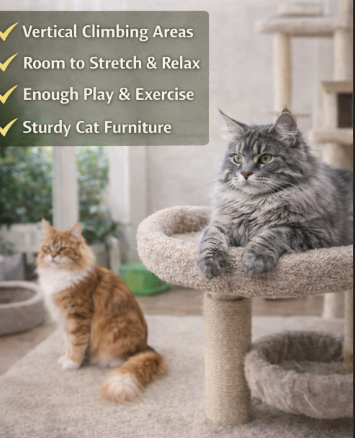
When thinking about space for large cats, vertical space is just as important as floor space. Cats naturally enjoy climbing and observing their surroundings from higher points. For larger breeds, this instinct remains strong, but they require sturdier and more spacious structures.
Tall cat trees, wall shelves, and window perches can significantly expand usable space without taking up extra floor area. However, these structures must be strong enough to support a heavier cat. Stability is essential, as unstable platforms can discourage use and increase the risk of injury.
Vertical space also provides a sense of security. When a cat can retreat to a high place, it feels more in control of its environment. This is especially important in busy households where noise or activity may cause stress.
By maximizing vertical areas, you effectively increase the available space for large cats, even in smaller homes. This approach allows your cat to move freely while maintaining a compact living space.
Designing A Comfortable Indoor Layout
Creating the right layout is a key part of providing enough space for large cats. Instead of filling your home with obstacles, focus on open pathways that allow smooth movement. Wide, clear areas help your cat navigate without feeling confined.
Furniture placement plays an important role. Arranging items to create natural walking routes encourages exploration and activity. At the same time, leaving enough room between objects prevents your cat from feeling restricted.
Resting areas should also be carefully chosen. Large cats need beds and surfaces that accommodate their full body length. Placing these areas in quiet, comfortable spots helps them relax without disturbance.
Additionally, consider the location of essentials like litter boxes and feeding stations. These should be easily accessible and spacious enough for your cat to use comfortably. Proper placement ensures that daily routines remain stress-free.
How Much Floor Space Is Enough
Many people wonder how much floor space for large cats is truly necessary. While there is no exact number, a general guideline is to ensure your cat has enough room to move freely without obstacles. This includes space for walking, stretching, and short bursts of activity.
Apartments and smaller homes can still work, but they require more thoughtful design. Open layouts and minimal clutter help maximize available space. In contrast, crowded environments can make even larger homes feel restrictive.
It is also important to observe your cat’s behavior. If your cat appears restless or avoids certain areas, it may indicate a lack of usable space. Adjusting the layout or adding vertical elements can often resolve these issues.
Ultimately, the goal is not just to provide space, but to create an environment where your cat feels comfortable and confident. When you focus on usability rather than size alone, it becomes easier to meet your cat’s needs.
Enrichment And Activity Needs
Providing enough space for large cats goes hand in hand with enrichment. Even with ample room, a lack of stimulation can lead to boredom and inactivity. Therefore, combining space with engaging activities is essential.
Interactive toys, climbing structures, and puzzle feeders encourage movement and mental engagement. These tools help your cat use the available space more effectively while staying active and alert.
Regular play sessions also play a crucial role. Engaging your cat in daily play helps release energy and strengthens your bond. For larger cats, this activity is especially important for maintaining a healthy weight.
Additionally, rotating toys and changing setups occasionally can keep the environment interesting. Small changes can make a big difference in how your cat interacts with its surroundings.
By combining enrichment with proper space for large cats, you create a dynamic environment that supports both physical and mental health.
Common Mistakes To Avoid
When setting up space for large cats, certain mistakes can limit your cat’s comfort. One common issue is relying only on floor space without considering vertical areas. This reduces the total usable environment.
Another mistake is choosing equipment that is too small or unstable. Standard cat furniture may not support larger breeds, leading to discomfort or avoidance. Investing in sturdy, appropriately sized items makes a significant difference.
Clutter is also a problem. Too many objects can restrict movement and create stress. Keeping the environment organized helps maintain open pathways and encourages exploration.
Ignoring your cat’s preferences can also lead to issues. Each cat has unique habits, so observing how your pet uses space helps you make better adjustments.
Avoiding these mistakes ensures that your efforts to provide space for large cats are effective and beneficial.
Adapting Small Homes For Large Cats
Even in smaller living spaces, it is possible to create a comfortable environment for large cats. The key is to think creatively and use every available area efficiently.
Vertical expansion is especially useful in compact homes. Installing shelves or climbing paths allows your cat to move upward rather than outward. This approach maximizes space without requiring additional floor area.
Multi-functional furniture can also help. For example, cat trees that double as storage or seating can save space while providing enrichment. Similarly, window perches offer both entertainment and relaxation spots.
Maintaining a clean and organized environment further enhances usability. When space is limited, reducing clutter becomes even more important.
With the right adjustments, even a small home can provide enough space for large cats to thrive comfortably.
Conclusion
Understanding how much space for large cats is needed indoors goes beyond simple measurements. It involves creating an environment that supports movement, comfort, and natural behavior. By combining open layouts, vertical structures, and enrichment activities, you can provide a balanced and satisfying space for your cat.
Large cats bring unique needs, but they also adapt well when their environment is thoughtfully designed. Whether you live in a spacious home or a smaller apartment, the right approach makes all the difference.
When you prioritize usability and comfort, your cat will feel more relaxed, active, and happy. In the end, providing the right space for large cats is not just about size, but about creating a home where they can truly thrive.
FAQ
- Do big cats need more room than regular cats?
Yes, larger cats need more space to move comfortably and express natural behaviors. - Can large cats live in apartments?
Yes, they can adapt well if the space is organized properly with vertical areas and open pathways. - How can I increase usable space indoors?
Adding shelves, cat trees, and perches helps expand vertical space without using more floor area. - What type of furniture is best for bigger cats?
Sturdy, oversized furniture that supports their weight and size is ideal for comfort and safety. - How do I know if my cat has enough space?
If your cat moves freely, plays regularly, and appears relaxed, the space is likely sufficient.