Many cat owners assume that all felines have similar activity needs. However, larger breeds often require more room to move, climb, stretch, and explore. Understanding exercise space large cats need is essential for maintaining both physical and mental health. While these cats can adapt to indoor living, they thrive when their environment encourages natural movement and daily activity.
Large breeds such as Maine Coons, Ragdolls, Norwegian Forest Cats, Savannah Cats, and Siberians are known for their impressive size and strength. Their larger frames place different demands on their environment compared to smaller cats. Therefore, providing adequate space is not simply a luxury. It is an important part of responsible pet care.
Many owners focus on food quality and veterinary care while overlooking exercise opportunities. Yet movement plays a critical role in weight management, muscle development, joint health, and emotional well-being. Consequently, creating a suitable living environment helps prevent many common health problems.
The good news is that owners do not necessarily need a huge house to meet these needs. Instead, thoughtful use of available space often matters more than square footage alone. By understanding how large cats interact with their surroundings, owners can create homes that support healthy and active lifestyles.
Why Bigger Cats Need More Room
Large cat breeds naturally occupy more physical space. Their longer bodies, larger paws, and greater weight mean they require wider pathways and sturdier surfaces. As a result, the average setup designed for smaller cats may not fully meet their needs.
When considering exercise space large cats require, it helps to think about how cats move throughout the day. They climb, jump, stretch, stalk, chase, and explore. Larger breeds perform these same activities, but they need additional room to do so comfortably and safely.
A Maine Coon, for example, may weigh twice as much as a smaller domestic cat. Because of its size, it benefits from larger climbing structures and wider resting platforms. Similarly, a Savannah Cat often possesses high energy levels and enjoys covering substantial distances during play sessions.
Restricted movement can contribute to weight gain and boredom. Furthermore, inactivity may increase the risk of joint problems over time. Therefore, providing adequate exercise opportunities becomes increasingly important as a cat’s size increases.
Owners sometimes worry that apartment living automatically limits activity. Fortunately, vertical space can significantly expand a cat’s environment. Shelves, cat trees, and elevated pathways allow large cats to move through multiple levels without requiring extra floor space.
Physical activity also supports mental stimulation. When cats can explore and interact with their environment, they remain engaged and less likely to develop destructive behaviors. Consequently, exercise space benefits both the pet and the household.
Understanding Daily Movement Needs
Every cat has its own personality and energy level. Nevertheless, most large breeds require consistent opportunities for movement throughout the day. While some enjoy energetic play sessions, others prefer frequent periods of moderate activity.
The amount of exercise space large cats need often depends on age, breed, and overall health. Young cats usually demand more room because they spend considerable time running, climbing, and investigating new areas. Adult cats may appear calmer, yet they still require regular exercise to maintain fitness.
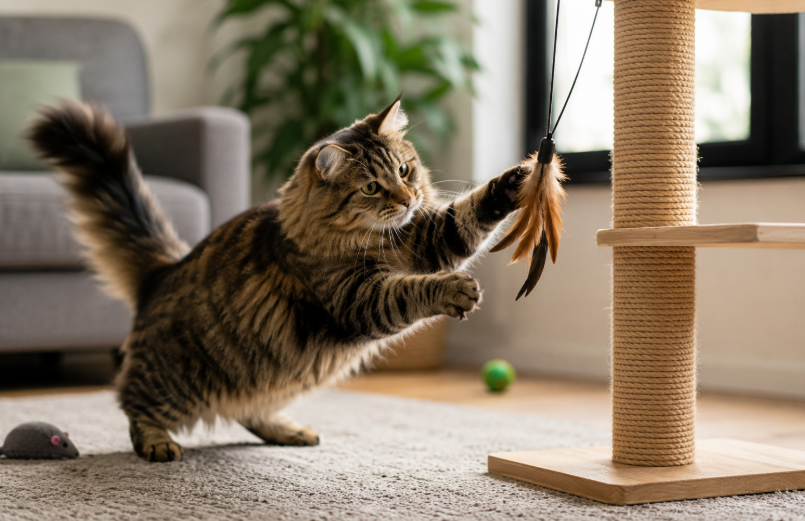
Large breeds often benefit from at least two dedicated play sessions each day. Interactive toys encourage chasing, pouncing, and jumping. These activities help mimic natural hunting behaviors while promoting physical conditioning.
Open floor areas can be valuable for active games. Even a hallway can become an exercise zone when paired with toys and owner interaction. Therefore, owners should look for creative ways to encourage movement throughout the home.
Climbing opportunities are equally important. Cats naturally seek elevated vantage points because height provides security and observation opportunities. Large breeds often enjoy climbing, but they require sturdy structures capable of supporting their weight safely.
Regular movement helps prevent obesity, which remains one of the most common health concerns among indoor cats. Moreover, maintaining a healthy weight reduces stress on joints and supports long-term mobility.
The Importance of Vertical Space
When discussing feline exercise, many people focus solely on floor space. However, vertical territory often matters just as much. In fact, vertical environments can dramatically increase the usable area available to a cat.
Creating adequate exercise space large cats can enjoy often involves thinking upward rather than outward. Wall-mounted shelves, sturdy cat trees, and climbing systems encourage exploration while maximizing available room.
Large breeds require durable equipment designed specifically for their size. Small platforms may feel unstable or uncomfortable. Therefore, owners should choose structures with wide perches and strong support systems.
Vertical pathways encourage movement between different areas of the home. As cats travel from shelf to shelf, they engage muscles and maintain coordination. Additionally, elevated resting spots provide opportunities for relaxation after periods of activity.
Window perches can add another valuable element. Many cats enjoy watching birds, insects, and outdoor activity. This form of enrichment stimulates the mind and encourages movement throughout the day.
Vertical environments can also reduce stress in multi-cat households. When cats have access to different levels, they can maintain personal space more easily. Consequently, conflicts may become less frequent.
Even modest homes can benefit from creative vertical design. By utilizing walls and corners effectively, owners can provide substantial exercise opportunities without sacrificing living space.
Creating an Indoor Environment That Encourages Activity
Indoor cats depend entirely on their environment for exercise opportunities. Therefore, thoughtful design can make a significant difference in overall health and happiness.
Providing sufficient exercise space large cats need starts with identifying areas that encourage natural behaviors. Cats enjoy stalking, climbing, hiding, and exploring. Incorporating these activities into daily life promotes both physical and mental stimulation.
Interactive toys remain one of the most effective tools available. Wand toys, balls, tunnels, and puzzle feeders encourage movement while preventing boredom. Rotating toys regularly helps maintain interest and excitement.
Furniture placement can influence activity levels as well. Cats often enjoy traveling between elevated surfaces. Therefore, strategically arranged furniture may create natural pathways that encourage exploration.
Scratching posts also play an important role. Stretching while scratching helps maintain flexibility and muscle tone. Large breeds benefit from tall, sturdy scratching surfaces that accommodate their full body length.
Food puzzles offer another excellent option. Instead of receiving meals from a stationary bowl, cats must move and think to access their food. As a result, feeding time becomes both physically and mentally engaging.
Owners should also consider safe access to different rooms. A varied environment encourages curiosity and exploration. Consequently, cats remain more active throughout the day.
How Much Space Is Actually Enough?
There is no universal measurement that guarantees success because every cat has unique needs. However, certain guidelines can help owners evaluate their current setup.
Most experts agree that exercise space large cats require should include room for running, climbing, stretching, and interactive play. A small apartment can still work well if it includes sufficient enrichment and vertical opportunities.
Large breeds generally benefit from multiple activity zones rather than one dedicated play area. For example, a climbing station in one room, a window perch in another, and open floor space elsewhere encourage movement between locations.
Cats that spend most of their time sleeping in a single area may need additional enrichment. Similarly, signs of boredom such as excessive vocalization, destructive behavior, or overeating may indicate insufficient activity opportunities.
Outdoor enclosures can provide additional exercise options when available. Secure cat patios, often called catios, allow cats to experience fresh air and new sights safely. As a result, they gain additional stimulation without exposure to common outdoor risks.
The quality of space often matters more than the quantity. A thoughtfully designed environment can support healthy activity even within limited square footage. Therefore, owners should focus on creating opportunities rather than simply measuring room dimensions.
Signs Your Large Cat Needs More Exercise
Recognizing signs of insufficient activity can help owners make timely improvements. Many cats communicate their needs through behavior changes long before physical problems develop.
When exercise space large cats need is lacking, weight gain often becomes noticeable. Excess body fat can place additional strain on joints and reduce overall mobility. Therefore, monitoring body condition regularly is important.
Boredom may also appear through destructive behavior. Cats that scratch furniture excessively or knock objects off surfaces may be seeking stimulation. Likewise, increased vocalization can signal frustration or unmet activity needs.
Some cats become less social when they lack enrichment. Others may develop repetitive behaviors such as overgrooming. Consequently, behavioral changes should not be ignored.
Reduced muscle tone can indicate insufficient movement as well. Healthy cats typically maintain strong muscles through regular activity. If a cat appears weaker or less agile, environmental changes may help.
Owners should pay attention to daily habits. Cats that rarely climb, explore, or engage with toys may benefit from additional encouragement and improved exercise opportunities.
Conclusion
Providing enough exercise space large cats need is one of the most important aspects of responsible ownership. While larger breeds can adapt to various living situations, they thrive when their environment supports natural movement and exploration. Physical activity helps maintain a healthy weight, strengthens muscles, supports joint health, and reduces boredom.
Fortunately, meeting these needs does not always require a large home. Thoughtful use of vertical space, interactive play, climbing opportunities, and environmental enrichment can dramatically increase activity levels. By creating an engaging environment, owners can support both physical fitness and emotional well-being.
Ultimately, understanding the unique requirements of larger breeds leads to healthier and happier pets. When cats have the room and opportunities they need to move, climb, explore, and play, they are more likely to enjoy long, active, and fulfilling lives.
FAQ
1. Which cat breeds usually need the most room to exercise?
Large breeds such as Maine Coons, Savannah Cats, Norwegian Forest Cats, and Siberians often benefit from additional activity space.
2. Can a giant cat breed live comfortably in an apartment?
Yes. With proper enrichment, vertical climbing areas, and daily play sessions, many large cats adapt well to apartment living.
3. How often should I play with a large indoor cat?
Most benefit from at least two interactive play sessions each day, although highly active breeds may enjoy more.
4. Are cat trees important for bigger breeds?
Absolutely. Sturdy cat trees provide climbing opportunities, mental stimulation, and elevated resting spaces.
5. What are common signs that my cat needs more activity?
Weight gain, boredom, destructive behavior, excessive vocalization, and reduced muscle tone can all indicate insufficient exercise.