Maine Coons are not just beautiful; they are also highly intelligent and playful cats. Their large size and curious nature mean they require ample mental and physical stimulation to prevent boredom and maintain their well-being. Providing effective Maine Coon play enrichment is essential for these gentle giants, helping them burn off energy, satisfy their hunting instincts, and strengthen the bond with their human companions. Without adequate stimulation, Maine Coons can become destructive or lethargic. Therefore, exploring engaging ways to keep them entertained is crucial. This article will delve into various strategies to ensure your magnificent feline thrives.
Understanding Your Maine Coon’s Play Needs
Maine Coons possess a unique blend of intelligence, curiosity, and a strong prey drive. They are often described as having a ‘dog-like’ personality, which extends to their playful nature. Unlike some cat breeds that might be content with short bursts of activity, Maine Coons typically enjoy sustained engagement. Consequently, understanding their specific needs is the first step toward effective play. They need activities that challenge their minds and bodies. Moreover, their large size means toys and structures must be durable and appropriate for their stature. Neglecting these needs can lead to behavioral issues. For instance, a bored Maine Coon might scratch furniture or vocalize excessively.
Furthermore, Maine Coons are highly social animals. They often enjoy interactive play with their human family members. This interaction not only provides physical exercise but also strengthens the bond you share. Many Maine Coons even enjoy learning tricks, showcasing their impressive cognitive abilities. Therefore, incorporating a variety of play styles is key. This ensures all aspects of their well-being are addressed, from physical health to mental acuity and emotional connection. Regular play sessions are a cornerstone of their daily routine.
The Importance of Consistent Maine Coon Play Enrichment
Consistency in play is paramount for Maine Coons. Just like humans, cats thrive on routine. Establishing a regular schedule for play sessions helps manage their energy levels and provides a predictable outlet for their instincts. For example, two 15-20 minute active play sessions daily can make a significant difference. These sessions should be engaging and varied to prevent monotony. A consistent approach also helps prevent boredom-related behaviors. In addition, it allows you to observe your cat’s preferences and adjust activities accordingly. Regular interaction also offers an opportunity for early detection of any health issues, as changes in play behavior can sometimes signal underlying problems.
Moreover, consistent Maine Coon play enrichment contributes to their overall physical health. Regular exercise helps maintain a healthy weight, which is crucial for preventing conditions like feline obesity and related joint problems. Their muscular build benefits from activities that promote running, jumping, and climbing. A well-exercised Maine Coon is generally a happier and healthier cat. Therefore, prioritizing daily play is not just about fun; it’s about responsible pet ownership. It’s a commitment to their long-term health and happiness.
7 Engaging Play Ideas for Your Maine Coon Cat
Incorporating a variety of activities is crucial for comprehensive Maine Coon play enrichment. These ideas cater to different aspects of their physical and mental needs, ensuring a well-rounded and stimulating environment for your beloved feline.
1. Interactive Wand Toys: Tapping into Their Hunting Instincts
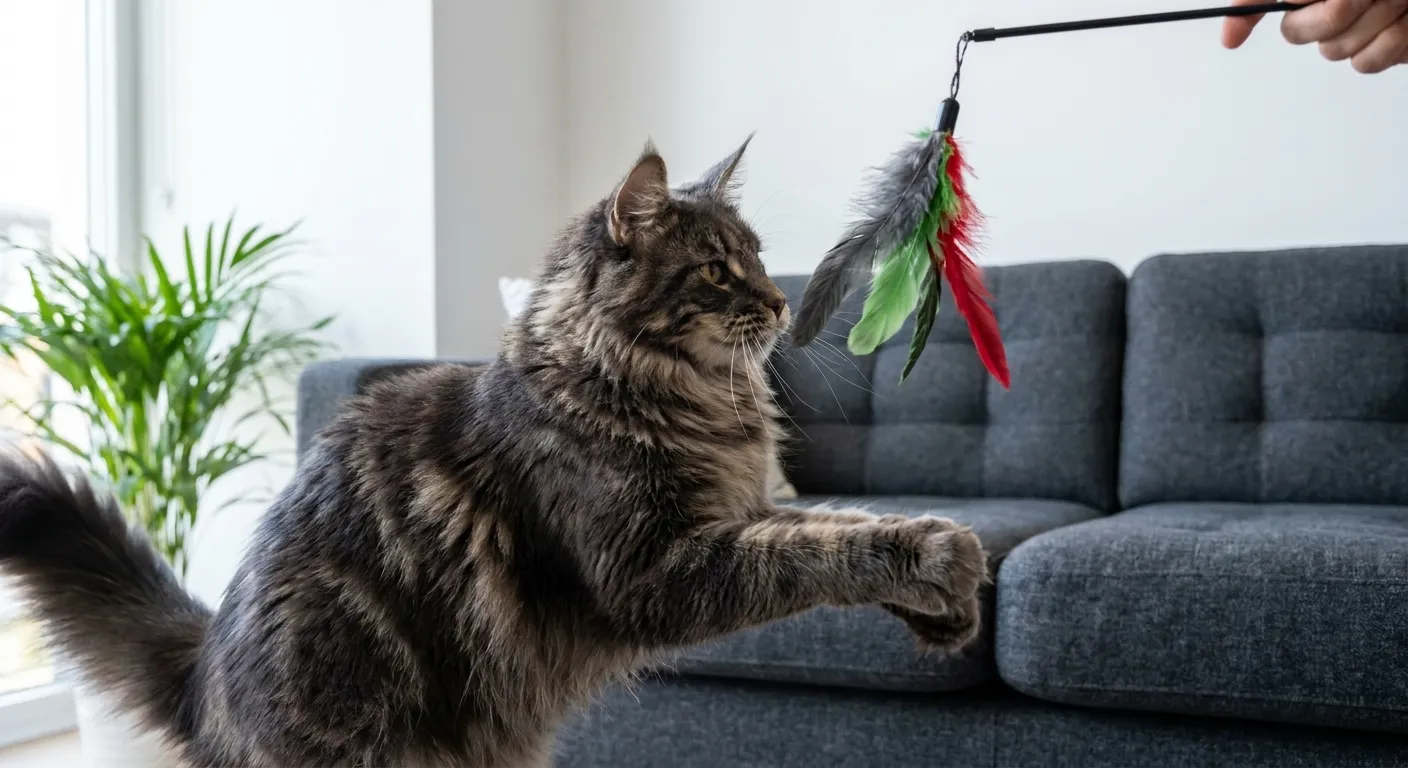
Maine Coons love to chase and pounce. Feather wands, fishing pole toys, and other interactive items that mimic prey are fantastic for engaging their hunting instincts. The unpredictable movements of a wand toy simulate the thrill of the hunt, providing excellent physical exercise. Dedicate at least 15-20 minutes daily to active play sessions. Move the toy like a bird or a small rodent, allowing your cat to stalk, pounce, and ‘capture’ it. This successful capture is vital for their mental satisfaction. Moreover, it prevents the frustration that can arise from never catching their prey. Ensure the wand toys are durable enough to withstand a Maine Coon’s size and strength. Rotate toys regularly to keep them interested.
2. Puzzle Feeders: Mental Stimulation Through Food
Challenge their minds by making them work for their food. Puzzle feeders dispense treats or kibble as the cat manipulates them, providing mental stimulation and slowing down eating. These feeders come in various designs, from simple treat balls to complex mazes. They encourage natural foraging behaviors, which are inherently satisfying for cats. This activity can be particularly beneficial for indoor cats, as it mimics the effort they would expend to find food in the wild. Additionally, slowing down eating can aid digestion and prevent overeating. Introduce different types of puzzle feeders gradually to keep the challenge fresh. You can find a wide selection of puzzle feeders at reputable pet supply stores or online retailers.
3. High-Quality Cat Trees and Perches: Vertical Exploration
Maine Coons enjoy climbing and observing their surroundings from elevated positions. A sturdy, multi-level cat tree with scratching posts and cubbies can provide hours of entertainment and a sense of security. Given their large size, it’s essential to invest in a robust cat tree that won’t wobble or tip over. Look for models with wide platforms and strong posts. Placing a cat tree near a window offers an excellent vantage point for bird watching, which is another form of enrichment. Similarly, wall-mounted shelves or perches can create vertical pathways, allowing your Maine Coon to explore their environment from new heights. These structures satisfy their innate desire to climb and survey their territory.
4. Fetch Games: A Canine-Like Pastime
Many Maine Coons enjoy playing fetch, much like dogs. This unique trait makes them particularly engaging companions. Use small, soft toys they can easily carry in their mouths, such as crinkle balls or plush mice. Start by gently tossing the toy a short distance and encourage them to retrieve it with positive reinforcement, like praise or a small treat. Over time, you can increase the distance. This game provides excellent cardiovascular exercise and strengthens the bond between you and your cat. It’s a wonderful way to interact and burn off some of their considerable energy. Not all Maine Coons will take to fetch, but many do with consistent encouragement.
5. Laser Pointers (Used Responsibly): Controlled Chasing
Laser pointers can be great for exercise, stimulating quick movements and chases. However, it’s crucial to use them responsibly to prevent frustration. Always end the session by letting your cat ‘catch’ a physical toy to prevent the feeling of never reaching their ‘prey’. This allows them to complete the hunting sequence, which is psychologically important. Without a successful ‘capture’, continuous laser play can lead to frustration and redirected aggression. Keep sessions short and integrate them with other forms of play. For example, after a few minutes of chasing the laser, immediately switch to a wand toy. This ensures a satisfying conclusion to their hunting efforts.
6. Outdoor Enclosures (Catios): Safe Outdoor Exploration
For supervised outdoor time, a secure catio allows them to experience fresh air and sensory enrichment safely without the dangers of roaming free. Catios provide a protected space where your Maine Coon can enjoy the sights, sounds, and smells of the outdoors. This is particularly beneficial for indoor cats, offering a vital connection to nature. Ensure the catio is escape-proof and provides shade, shelter, and fresh water. You can enhance the experience with climbing structures, scratching posts, and even live plants (non-toxic to cats). A catio offers a rich sensory environment that greatly contributes to their overall well-being. For more information on creating a safe outdoor space, consider resources from organizations like the ASPCA.
7. Training and Tricks: Mental Agility and Bonding
Maine Coons are intelligent and can be taught tricks like ‘sit,’ ‘stay,’ or ‘high five.’ This provides significant mental engagement and builds a stronger relationship. Use positive reinforcement methods, such as clicker training and treat rewards. Start with simple commands and gradually work up to more complex tricks. Training sessions should be short, fun, and end on a positive note. This activity not only challenges their intellect but also enhances communication between you and your cat. It’s a wonderful way to showcase their cleverness and create unique shared experiences. Many Maine Coons genuinely enjoy the challenge and the attention that comes with learning new things.
Creating an Enriched Environment for Your Maine Coon
Beyond specific play ideas, creating a generally enriched environment is vital for your Maine Coon. This involves providing a variety of stimuli and opportunities for natural behaviors throughout their living space. Consider rotating toys regularly to maintain novelty. Cats can become bored with the same toys if they are always available. By putting some away and reintroducing them later, you keep their interest piqued. Similarly, ensure they have access to scratching posts and pads of various materials (sisal, cardboard, carpet) to satisfy their scratching needs. This also helps protect your furniture.
Furthermore, provide comfortable resting spots in different areas of the house, including elevated perches and cozy hideaways. Maine Coons appreciate having choices for where they can relax and observe their surroundings. Access to windows with a view is also a simple yet effective form of enrichment. Bird feeders placed outside a window can provide endless entertainment. Moreover, consider using feline pheromone diffusers in areas where your cat spends a lot of time. These can help create a calming atmosphere and reduce stress, contributing to a more relaxed and playful mood.
Addressing Common Play Challenges
Sometimes, despite your best efforts, your Maine Coon might seem uninterested in play. Several factors could contribute to this. First, ensure your cat is healthy. Any sudden change in play behavior warrants a vet visit, as it could indicate pain or illness. Second, consider the time of day. Cats are crepuscular, meaning they are most active at dawn and dusk. Scheduling play sessions during these times might yield better results. Third, evaluate the toys. Some cats have strong preferences. Experiment with different textures, sizes, and types of toys to discover what truly excites your Maine Coon. Lastly, your energy during playtime matters. Cats pick up on our moods. Approach play sessions with enthusiasm and patience.
Another challenge can be destructive play. This often stems from boredom or a lack of appropriate outlets. If your Maine Coon is scratching furniture, provide more appealing scratching surfaces. If they are pouncing on your feet, redirect their hunting instincts to interactive toys. Never punish your cat for natural behaviors; instead, guide them towards acceptable alternatives. Consistent and appropriate Maine Coon play enrichment is the best defense against undesirable behaviors. It channels their natural instincts into positive and constructive outlets, benefiting both your cat and your home environment.
The Long-Term Benefits of Proper Maine Coon Play Enrichment
The dedication to providing proper Maine Coon play enrichment yields numerous long-term benefits. Physically, it helps maintain a healthy weight, strengthens muscles, and improves coordination. This reduces the risk of obesity-related health issues and supports their overall vitality. Mentally, it keeps their minds sharp, prevents cognitive decline, and satisfies their innate curiosity. A mentally stimulated cat is less likely to develop behavioral problems stemming from boredom or frustration. Emotionally, regular interactive play strengthens the bond between you and your Maine Coon, fostering trust and companionship. It reduces stress and anxiety, contributing to a calmer and happier feline. In essence, thoughtful play enrichment is an investment in your Maine Coon’s holistic well-being, ensuring they lead a full, joyful, and healthy life as a cherished member of your family.
Conclusion
Incorporating a variety of these Maine Coon play enrichment activities into your cat’s routine will significantly contribute to their happiness and health. Remember, consistency and variety are key to keeping these magnificent felines engaged and preventing boredom. Tailor the activities to your cat’s individual preferences, and enjoy the playful moments! By understanding their unique needs and providing ample opportunities for physical and mental stimulation, you are ensuring your Maine Coon thrives. A well-played cat is a happy cat, and a happy cat makes for a wonderful companion. Embrace the joy of play with your gentle giant, and watch them flourish.
FAQ: Frequently Asked Questions About Maine Coon Play
What kinds of toys are best for Maine Coons?
Maine Coons benefit from durable interactive toys like feather wands, fishing pole toys, and crinkle balls. They also enjoy puzzle feeders and sturdy cat trees. Given their size, choose toys that can withstand vigorous play and are safe for them to mouth and carry.
How often should I play with my Maine Coon?
Aim for at least two active play sessions daily, each lasting 15-20 minutes. Consistency is key, and scheduling these sessions around their natural active times (dawn and dusk) can be very effective. Short, frequent sessions are often better than one long, infrequent one.
Can Maine Coons be leash trained for walks?
Yes, many Maine Coons can be leash trained! They often enjoy exploring the outdoors safely. Start with a comfortable harness and short sessions in a secure area. Positive reinforcement and patience are essential for successful leash training.
My Maine Coon seems bored. What should I do?
If your Maine Coon seems bored, try rotating their toys, introducing new types of enrichment like puzzle feeders or a catio, and increasing interactive play. Ensure they have vertical spaces to explore and consider teaching them new tricks to challenge their mind. A vet visit can rule out any underlying health issues.
Are laser pointers bad for cats?
Laser pointers can be good for exercise but must be used responsibly. Always end a laser pointer session by directing the beam onto a physical toy your cat can ‘catch’ and pounce on. This prevents frustration from never successfully completing the hunt and helps satisfy their prey drive.
Explore more: More from MaineCoonCatsGuide