
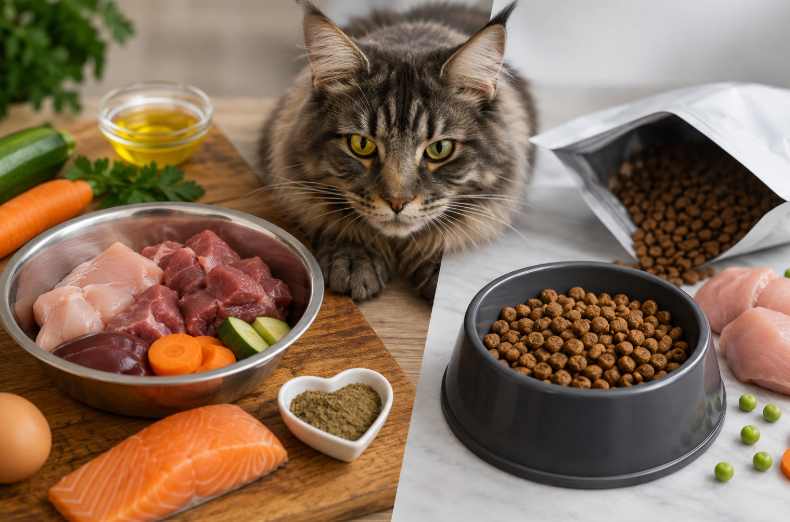
Many pet owners are becoming more interested in natural cat food as they look for healthier ways to feed their feline companions. With growing awareness of ingredients, nutrition, and pet wellness, the debate between homemade and store bought options continues to gain attention. Some owners prefer preparing meals themselves because they want complete control over ingredients. Others choose commercial products because they offer convenience and balanced nutrition.
Both approaches have advantages and disadvantages. Therefore, understanding the differences can help you make informed decisions for your cat’s health. While feeding trends often focus on one option as superior, the reality is more nuanced. Every cat has unique nutritional requirements, and the best choice depends on lifestyle, budget, and the ability to provide complete nutrition.
Cats are obligate carnivores. This means they require nutrients found primarily in animal-based foods. Consequently, any feeding plan should prioritize high-quality protein and essential nutrients. Whether you choose homemade meals or commercial products, meeting those needs must remain the top priority.
One reason natural cat food has become so popular is the desire to avoid excessive fillers, artificial additives, and highly processed ingredients. However, natural does not automatically mean balanced. Understanding this distinction is essential before deciding which route to follow.
What Defines Natural Feeding for Cats
The term natural can mean different things to different people. Generally, it refers to foods made from recognizable ingredients with minimal artificial additives. However, natural products can still vary significantly in quality and nutritional value.
Many commercial brands market natural cat food products that contain real meat, limited ingredients, and fewer artificial preservatives. These foods are often designed to provide complete nutrition while appealing to owners who prefer simpler ingredient lists.
Homemade diets take a different approach. Owners prepare meals using fresh ingredients such as chicken, turkey, beef, fish, and organ meats. As a result, they gain direct control over what goes into every meal. This transparency appeals to people who want to avoid ingredients they consider unnecessary.
Despite these differences, both feeding methods share the same goal. They aim to provide healthy nutrition that supports long-term wellness. Therefore, the most important factor is not whether food is homemade or store bought. Instead, it is whether the diet meets all nutritional requirements.
Understanding feline nutritional needs helps separate marketing claims from practical feeding decisions. Cats require protein, fats, vitamins, minerals, and amino acids in precise amounts. Consequently, any feeding strategy must account for these requirements.
The Benefits of Homemade Feeding
Many owners are attracted to homemade meals because they offer complete ingredient control. When preparing natural cat food at home, you know exactly what your cat is eating. This can be especially appealing for pets with food sensitivities or specific dietary concerns.
Fresh ingredients are another advantage. Homemade meals often contain freshly prepared proteins and fewer preservatives. Therefore, some owners feel more confident about ingredient quality.
Customization is also a significant benefit. Cats have individual preferences and nutritional needs. Homemade feeding allows owners to adjust recipes according to veterinary recommendations or specific health conditions.
For example, some cats require special diets due to allergies or digestive issues. In these situations, carefully planned homemade meals may provide greater flexibility. Consequently, owners can avoid ingredients that trigger problems.
Another advantage is transparency. Many people appreciate seeing whole ingredients rather than relying on product labels. As a result, they feel more connected to their pet’s nutrition and overall care.
However, homemade feeding requires substantial commitment. Preparing meals takes time, planning, and attention to detail. Furthermore, recipes must be nutritionally complete to support long-term health.
Challenges of Homemade Diets
While homemade feeding offers benefits, it also presents significant challenges. One of the biggest concerns involves nutritional balance. Cats require specific nutrients that are not always easy to provide through homemade recipes.
Many online recipes for natural cat food appear healthy but lack essential nutrients. Taurine deficiency, for example, can cause serious heart and eye problems. Similarly, improper calcium-to-phosphorus ratios may affect bone health.
Veterinary nutritionists often recommend working with a professional when creating homemade diets. This helps ensure that meals provide complete and balanced nutrition. Therefore, owners should avoid relying solely on unverified internet recipes.
Food safety is another consideration. Raw ingredients can contain harmful bacteria that affect both pets and humans. Proper handling, storage, and preparation are essential for reducing risks.
Cost can also become a factor. High-quality ingredients, supplements, and professional nutritional consultations may increase expenses. Consequently, homemade feeding is not always cheaper than premium commercial options.
Time requirements deserve attention as well. Shopping, meal preparation, portioning, and storage demand ongoing effort. While some owners enjoy the process, others find it difficult to maintain consistently.
These challenges do not make homemade feeding impossible. However, they highlight the importance of careful planning and professional guidance.
Advantages of Store Bought Options
Commercial diets remain the most popular feeding choice for several reasons. Convenience is perhaps the most obvious benefit. High-quality natural cat food products provide ready-to-serve nutrition that saves time and effort.
Most reputable manufacturers formulate their foods to meet established nutritional standards. As a result, owners can feel confident that essential nutrients are included in appropriate amounts.
Consistency is another major advantage. Every serving contains the same nutritional profile. Therefore, cats receive predictable nutrition day after day. This consistency can be especially helpful for pets with sensitive digestive systems.
Commercial foods also undergo extensive testing and quality control. Many manufacturers employ veterinary nutritionists and conduct feeding trials to evaluate product performance. Consequently, these products often provide reliable nutrition.
Variety is readily available as well. Owners can choose from wet food, dry food, freeze-dried diets, and fresh refrigerated options. This flexibility allows families to select products that match their preferences and budget.
Many premium brands focus on simple ingredients, high-quality proteins, and limited additives. Therefore, store bought products can align closely with the goals of owners seeking more natural feeding options.
Potential Drawbacks of Commercial Foods
Although commercial foods offer convenience, they are not without limitations. Some products contain ingredients that certain owners prefer to avoid. Therefore, reading labels carefully remains important.
Not all natural cat food products are created equal. Marketing terms can sometimes be misleading. A package labeled natural may still contain ingredients that differ from consumer expectations.
Processing is another concern for some owners. Commercial foods undergo manufacturing procedures that extend shelf life and ensure safety. While these processes provide practical benefits, some people prefer less processed alternatives.
Cost can vary significantly. Premium brands often carry higher price tags, especially those featuring high-quality proteins and specialized formulations. Consequently, feeding a large cat or multiple pets can become expensive.
Ingredient sourcing may also influence purchasing decisions. Some owners prefer locally sourced or human-grade ingredients, which are not always available in every commercial product.
Despite these concerns, many commercial foods provide excellent nutrition. Therefore, evaluating products individually is more useful than making assumptions based solely on category.
Comparing Costs and Long Term Value
Cost plays an important role when choosing between homemade and commercial diets. However, comparing expenses involves more than simply examining the price of food.
At first glance, homemade natural cat food may appear less expensive. Yet ingredient quality, supplements, kitchen equipment, and preparation time all contribute to overall costs. Additionally, professional nutritional guidance may add to the expense.
Commercial foods offer predictable pricing and convenience. Although premium products can be costly, they eliminate the need for recipe development and nutritional calculations. As a result, many owners find them more practical.
Veterinary costs should also be considered. Nutritional deficiencies can lead to health issues that require treatment. Therefore, properly balanced diets may help reduce certain long-term risks.
Time has value as well. Preparing meals regularly requires ongoing effort. Consequently, busy households often appreciate the simplicity of ready-made options.
The best value depends on individual circumstances. Some owners enjoy meal preparation and are willing to invest additional time. Others prioritize convenience while still seeking high-quality nutrition.
How To Choose the Best Option for Your Cat
Selecting the right feeding approach begins with understanding your cat’s specific needs. Age, health status, activity level, and personal preferences all influence dietary requirements.
When evaluating natural cat food, start by considering nutritional completeness. A diet that lacks essential nutrients can create problems regardless of ingredient quality. Therefore, balanced nutrition should remain the foundation of any decision.
Consulting your veterinarian is highly recommended. Professional guidance can help identify suitable options and address individual health concerns. Additionally, veterinarians can recommend specialists when homemade feeding is being considered.
Observe your cat’s response to food choices. Healthy skin, a shiny coat, good energy levels, consistent digestion, and proper weight maintenance often indicate appropriate nutrition. Consequently, monitoring overall wellness provides valuable feedback.
Flexibility can also be beneficial. Some owners combine homemade meals with commercial foods. Others rotate between different high-quality products. These approaches may offer variety while maintaining nutritional balance.
Ultimately, the ideal feeding strategy is one that supports your cat’s health and fits realistically into your lifestyle.
Conclusion
The debate between homemade and commercial feeding continues because both approaches offer meaningful advantages. Homemade meals provide ingredient control, customization, and transparency. Meanwhile, commercial products offer convenience, consistency, and scientifically balanced nutrition.
When considering natural cat food, it is important to look beyond trends and focus on what truly matters. Cats require complete nutrition, high-quality protein, and essential nutrients to thrive. Whether those nutrients come from homemade recipes or carefully selected commercial products, balance remains the key factor.
For many families, premium commercial foods provide an effective and practical solution. Others successfully prepare homemade meals with professional guidance and careful planning. Neither option is universally superior. Instead, the best choice depends on your cat’s needs, your available time, and your commitment to maintaining nutritional quality.
By making informed decisions and prioritizing your cat’s well-being, you can create a feeding plan that supports a long, healthy, and happy life.
FAQ
1. Is homemade feeding healthier than commercial feeding?
Not necessarily. Both options can support good health when they provide complete and balanced nutrition.
2. Do cats need supplements with homemade meals?
In many cases, yes. Homemade recipes often require supplements to meet essential nutrient requirements.
3. Are premium store bought diets worth the cost?
Many premium products offer high-quality ingredients and balanced nutrition, which can provide excellent value.
4. Can I combine fresh meals with commercial food?
Yes. Many owners successfully use a combination approach, but balance and portion control remain important.
5. What should I look for when selecting a diet?
Focus on nutritional completeness, high-quality protein sources, veterinary recommendations, and your cat’s individual needs.