Choosing the right food for your cat can feel confusing, especially when labels like organic and natural appear on so many products. The debate around organic vs natural cat food often leaves pet owners unsure about what truly benefits their cat. While both options sound healthy, they are not the same, and understanding the difference can help you make better decisions.
Cats rely on high-quality nutrition to stay active and healthy, so the type of food you choose matters more than you might think. Although organic and natural foods may seem similar at first glance, they follow different standards and processes. Therefore, learning how organic vs natural cat food compares is essential for providing the best care for your cat.
What Organic Cat Food Really Means
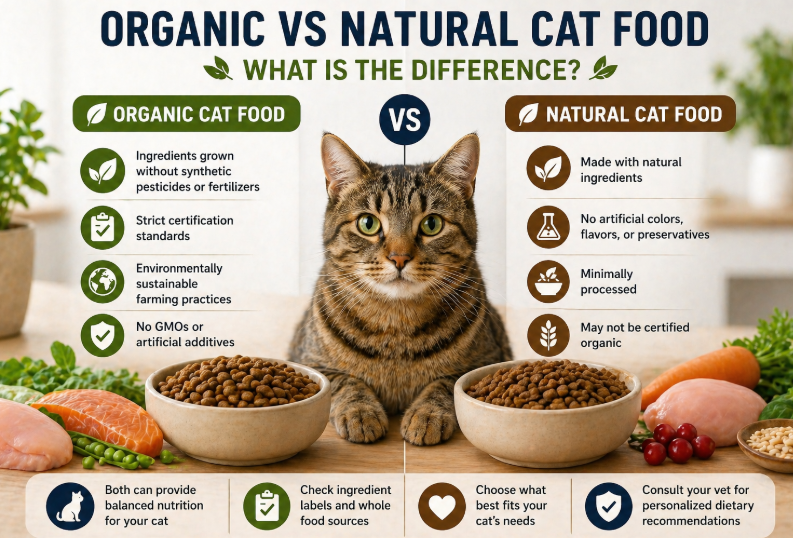
Organic cat food follows strict guidelines related to how ingredients are grown and processed. These products are made from ingredients that are produced without synthetic pesticides, fertilizers, or genetically modified organisms. Because of these standards, organic options are often considered cleaner and more controlled.
In addition, organic farming focuses on environmental sustainability. This means the ingredients used in organic cat food are typically produced with methods that support soil health and reduce pollution. As a result, many pet owners view organic food as a more responsible choice.
However, organic certification can vary depending on the region. Not all products labeled as organic meet the same level of standards. Therefore, when comparing organic vs natural cat food, it is important to check certifications and ingredient sources carefully.
What Natural Cat Food Actually Includes
Natural cat food focuses more on the type of ingredients used rather than how they are produced. Generally, natural foods avoid artificial additives, such as synthetic colors, flavors, and preservatives. Instead, they rely on minimally processed ingredients that remain close to their original state.
Unlike organic products, natural cat food does not always require strict farming practices. This means ingredients may still be exposed to pesticides or other chemicals during production. However, the final product is usually free from artificial enhancements.
When evaluating organic vs natural cat food, this distinction is key. Natural food prioritizes ingredient simplicity, while organic food emphasizes production methods. Both approaches aim to improve quality, but they do so in different ways.
Key Differences Between Organic And Natural Options
The main difference between organic vs natural cat food lies in regulation and sourcing. Organic food must meet specific certification standards, while natural food has more flexible guidelines. This makes organic options more consistent in terms of production quality.
Another difference is ingredient transparency. Organic labels often require detailed information about sourcing and processing. In contrast, natural labels may not always provide the same level of detail. As a result, organic products can be easier to evaluate.
Price is also a factor. Organic cat food is often more expensive due to stricter farming and certification requirements. Natural options, on the other hand, may be more affordable while still offering improved ingredient quality compared to conventional foods.
Despite these differences, both options can provide benefits when chosen carefully. Therefore, understanding organic vs natural cat food helps you decide which features matter most for your cat.
Nutritional Value And Quality Considerations
When it comes to nutrition, both organic and natural foods can offer high-quality options. The key is to focus on the ingredient list rather than the label alone. High-quality protein sources, healthy fats, and essential nutrients are what truly support your cat’s health.
Organic cat food may reduce exposure to certain chemicals, which can be beneficial for sensitive cats. However, this does not automatically make it more nutritious. Similarly, natural cat food may include excellent ingredients even without organic certification.
Therefore, when comparing organic vs natural cat food, it is important to evaluate the overall formula. Look for real meat as the primary ingredient and avoid excessive fillers. This approach ensures your cat receives balanced nutrition regardless of the label.
Safety And Health Benefits For Cats
Safety is a major concern for pet owners, and both organic and natural foods aim to reduce potential risks. Organic options limit exposure to synthetic chemicals, which may support long-term health. This can be especially helpful for cats with sensitivities or allergies.
Natural foods, on the other hand, reduce exposure to artificial additives. This can improve digestion and reduce the likelihood of adverse reactions. As a result, both types of food can contribute to better overall health.
However, not all products are equal. Some may use marketing terms without delivering real benefits. Therefore, understanding organic vs natural cat food helps you identify products that genuinely support your cat’s well-being.
Environmental Impact And Ethical Considerations
For many pet owners, environmental impact is an important factor. Organic farming methods are generally more sustainable, as they focus on reducing chemical use and supporting biodiversity. This makes organic cat food a popular choice for those who prioritize eco-friendly practices.
Natural cat food may also include sustainable ingredients, but it does not always follow strict environmental standards. Therefore, the impact can vary depending on the brand and sourcing methods.
When comparing organic vs natural cat food, considering environmental factors can help you align your choices with your values. Supporting brands that prioritize sustainability contributes to a healthier planet while benefiting your pet.
How To Choose The Best Option For Your Cat
Choosing between organic and natural cat food depends on your priorities and your cat’s specific needs. If reducing chemical exposure is your main concern, organic options may be the better choice. However, if you are focused on avoiding artificial additives, natural food can also be effective.
Budget is another consideration. While organic food may offer additional benefits, natural options can still provide high-quality nutrition at a lower cost. Therefore, balancing quality and affordability is important.
It is also helpful to observe how your cat responds to different foods. Changes in energy, coat condition, and digestion can provide valuable insights. By monitoring these factors, you can determine which option works best.
Ultimately, the decision comes down to finding a product that meets your cat’s nutritional needs while fitting your lifestyle. Understanding organic vs natural cat food makes this process easier and more informed.
Common Misconceptions About Cat Food Labels
Many pet owners assume that organic automatically means better, but this is not always the case. While organic food follows strict standards, it still needs to provide balanced nutrition. Without proper formulation, even organic food may fall short.
Another misconception is that natural food is always completely free from chemicals. In reality, natural labeling focuses on the final product rather than the production process. Therefore, some exposure to chemicals may still occur.
Understanding these misconceptions helps you avoid relying solely on labels. Instead, focus on ingredient quality and nutritional value. This approach ensures you choose the best option when comparing organic vs natural cat food.
Conclusion
Understanding organic vs natural cat food is essential for making informed decisions about your cat’s diet. While both options offer benefits, they differ in how ingredients are sourced and processed. Organic food emphasizes strict production standards, while natural food focuses on avoiding artificial additives.
By evaluating ingredient quality, nutritional value, and your cat’s individual needs, you can choose the best option with confidence. Small changes in diet can have a big impact on your cat’s health over time. Therefore, taking the time to understand these differences is a valuable step toward better care.
In the end, the best choice is one that supports your cat’s well-being while aligning with your priorities. With the right knowledge, you can create a feeding routine that promotes health, comfort, and long-term happiness.
FAQ
- What is the main difference between organic and natural cat food?
Organic food follows strict farming standards, while natural food focuses on avoiding artificial additives. - Is organic cat food always healthier?
Not necessarily, as overall nutrition depends on the ingredient quality and balance of the formula. - Can natural cat food still contain chemicals?
Yes, it may include ingredients exposed to chemicals during production, even if the final product is additive-free. - Which option is better for sensitive cats?
Both can work, but organic food may reduce exposure to certain irritants. - How do I choose the right food for my cat?
Check ingredient quality, observe your cat’s response, and choose a balanced formula that meets their needs.