Grain free cat food has become increasingly popular among pet owners who want the best for their cats. Many believe that removing grains automatically leads to better health, improved digestion, and higher energy levels. However, the reality is more complex, and understanding what grain free cat food truly offers is essential before making any changes.
Cats are obligate carnivores, which means their bodies rely primarily on animal-based protein. Because of this, it may seem logical to remove grains entirely. Yet, not all grains are harmful, and not all grain-free formulas are automatically better. Therefore, exploring the benefits, risks, and nutritional balance of grain free cat food helps you make a more informed decision for your cat’s long-term health.
What Grain Free Cat Food Really Means
Grain free cat food simply means that traditional grains like wheat, corn, and rice are not included in the formula. Instead, these foods often use alternative carbohydrate sources such as potatoes, peas, or lentils. While the label sounds appealing, it does not necessarily mean the food is low in carbohydrates or higher in protein.
In many cases, grain free cat food replaces grains with other fillers that serve a similar purpose. These ingredients help bind the food and provide energy, but they do not always improve nutritional value. As a result, the absence of grains does not automatically make the food healthier.
It is also important to note that grain-free labeling is often driven by marketing trends. While some cats may benefit from avoiding grains, others may not experience any difference. Therefore, understanding the full ingredient profile is more important than focusing on a single label.
Are Grains Actually Harmful To Cats
Grains have gained a negative reputation, but they are not inherently harmful to cats. In fact, many grains provide useful nutrients such as fiber, vitamins, and energy. When used in moderation, they can be part of a balanced diet.
Most cats can digest grains without any issues. Unlike common belief, grain allergies in cats are relatively rare. Protein sources are more likely to cause sensitivities than grains. Therefore, eliminating grains may not address the root cause of dietary problems.
However, quality matters. Low-quality grains used as fillers can reduce the overall nutritional value of the food. This is why some pet owners prefer grain free cat food, as it often avoids these cheaper ingredients. Still, the focus should remain on ingredient quality rather than the presence or absence of grains.
Potential Benefits Of Grain Free Diets
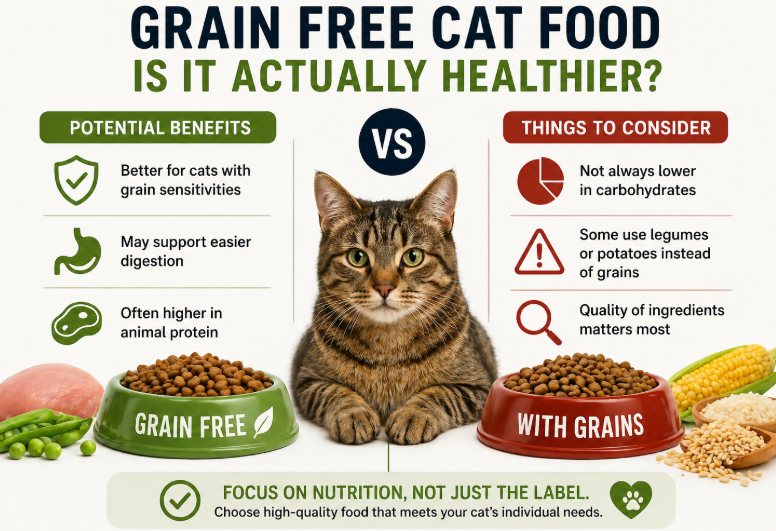
Grain free cat food can offer benefits in certain situations. For cats with specific sensitivities, removing grains may help reduce digestive discomfort or skin irritation. In these cases, a carefully chosen grain-free formula can improve overall well-being.
In addition, some grain-free foods contain higher levels of protein, which aligns with a cat’s natural dietary needs. This can support muscle development and energy levels when balanced properly. However, not all grain free cat food products follow this pattern, so reading labels is essential.
Another advantage is ingredient simplicity. Some grain-free formulas use fewer components, making it easier to identify potential allergens. As a result, these diets can be useful for elimination trials or sensitive cats.
Common Misconceptions About Grain Free Options
One of the biggest misconceptions is that grain free cat food is always healthier. While it may avoid certain fillers, it can still include other high-carbohydrate ingredients. This means the overall nutritional balance may not improve as expected.
Another misunderstanding is that all grains are bad. In reality, whole grains can provide beneficial nutrients when used appropriately. The issue lies more in the quality and quantity of ingredients rather than their category.
Some pet owners also assume that grain-free diets mimic a natural feline diet. While cats do not consume grains in the wild, commercial food is designed differently. Therefore, comparing these diets directly can be misleading.
Understanding these misconceptions helps you evaluate grain free cat food more objectively. Instead of relying on trends, you can focus on what truly benefits your cat.
Hidden Ingredients In Grain Free Formulas
While grain free cat food removes traditional grains, it often includes alternative ingredients that serve similar functions. Potatoes, peas, and legumes are common replacements. Although they are grain-free, they can still contribute significant carbohydrate levels.
In some cases, these substitutes may be harder to digest or less beneficial than high-quality grains. Additionally, excessive use of certain ingredients may affect nutrient balance. Therefore, it is important to consider the full formula rather than just the grain-free label.
Reading ingredient lists carefully helps you identify these hidden components. Look for real meat as the primary ingredient and ensure that carbohydrate sources are balanced. This approach ensures that grain free cat food meets your cat’s nutritional needs.
How To Evaluate Nutritional Balance
Choosing the right food requires more than checking for grains. A balanced diet should include high-quality protein, healthy fats, and essential vitamins and minerals. Grain free cat food can meet these requirements, but only if the formulation is well designed.
Start by examining the first few ingredients. These should include named protein sources such as chicken, turkey, or fish. Avoid vague terms that do not clearly identify the source of nutrients.
In addition, consider the overall composition. Protein should make up the majority of the diet, while carbohydrates should remain limited. This balance supports a cat’s natural dietary needs and promotes better health.
By focusing on nutritional quality, you can determine whether grain free cat food is the right choice for your pet.
When Grain Free Diets May Not Be Ideal
Grain free cat food is not suitable for every cat. In some cases, removing grains without proper balance can lead to nutritional gaps. This is especially true if alternative ingredients are not carefully selected.
Cats with no grain sensitivity may not benefit from switching to a grain-free diet. In fact, they may do just as well on high-quality food that includes grains. Therefore, making changes without a clear reason may not provide noticeable improvements.
In addition, some grain-free formulas may be higher in calories. This can lead to weight gain if portions are not adjusted accordingly. Monitoring your cat’s weight and activity level is essential when introducing any new diet.
Understanding when grain free cat food may not be ideal helps you avoid unnecessary changes and focus on what truly works for your cat.
Making The Right Choice For Your Cat
Selecting the best diet involves considering your cat’s unique needs, preferences, and health conditions. Grain free cat food can be a good option for some cats, but it is not a one-size-fits-all solution.
Start by consulting with your veterinarian, especially if your cat has existing health issues. Professional guidance ensures that dietary changes are safe and effective. In addition, gradual transitions help prevent digestive upset.
Observe your cat’s response to any new food. Changes in energy, coat condition, and digestion can provide valuable insights. By paying attention to these signs, you can determine whether grain free cat food is beneficial.
Ultimately, the goal is to provide a balanced and nutritious diet that supports long-term health. Whether that includes grains or not depends on your cat’s individual needs.
Conclusion
Grain free cat food can be a useful option, but it is not automatically healthier in every situation. While it may benefit cats with specific sensitivities, it does not guarantee better nutrition. The key lies in evaluating ingredient quality, balance, and your cat’s unique requirements.
By understanding the differences and avoiding common misconceptions, you can make more informed choices. Instead of following trends, focus on providing a diet that supports your cat’s overall well-being. With careful consideration, you can ensure your cat receives the nutrition they need to thrive.
FAQ
- Do cats need grain free diets to stay healthy?
Not necessarily, as many cats can digest grains without any problems. - Are grain allergies common in cats?
No, protein allergies are more common than grain-related sensitivities. - Can grain-free diets cause weight gain?
Some formulas may be higher in calories, so portion control is important. - How do I know if my cat needs a different diet?
Watch for signs like digestive issues, skin problems, or low energy levels. - Should I switch foods without consulting a vet?
It is always better to seek professional advice before making major dietary changes.