Raw cat food has gained attention among pet owners who want to provide a diet that closely mirrors what cats would eat in the wild. Many believe that feeding raw meat offers a more natural and biologically appropriate option compared to processed alternatives. However, while the idea sounds appealing, it is important to look deeper into what raw cat food actually involves and whether it truly delivers the benefits it promises.
Cats are obligate carnivores, which means their bodies are designed to process animal-based nutrients. Because of this, raw feeding may seem like the ideal approach. Yet, not all raw diets are created equal, and improper balance can lead to serious health concerns. Therefore, understanding the advantages and risks of raw cat food is essential before making any changes to your cat’s routine.
What Raw Feeding Really Means For Cats
Raw cat food typically consists of uncooked meat, organs, and sometimes bones. The goal is to replicate a natural prey-based diet that cats might consume in the wild. This approach emphasizes high protein content and minimal processing, which many owners find appealing.
However, a balanced raw diet requires more than just feeding meat. Cats need specific nutrients such as taurine, calcium, and essential vitamins. Without careful planning, these requirements may not be met. As a result, raw cat food must be formulated properly to ensure it supports overall health.
In addition, sourcing quality ingredients is crucial. Fresh, high-quality meat reduces the risk of contamination and ensures better nutritional value. Therefore, understanding the composition of raw diets is key to evaluating their effectiveness.
Potential Benefits Of Raw Diets
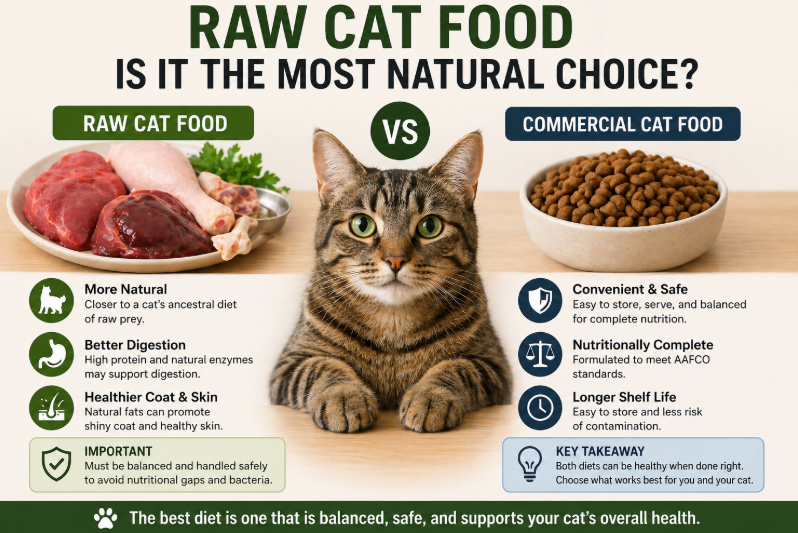
One of the main reasons owners choose raw cat food is the potential for improved digestion. Because the ingredients are less processed, some cats may absorb nutrients more efficiently. This can lead to better stool quality and reduced digestive issues.
Another benefit is coat condition. Many cats on raw diets develop shinier fur and healthier skin. This improvement is often linked to higher levels of natural fats and proteins. In addition, some owners report increased energy and vitality in their pets.
Weight management can also improve with raw feeding. High protein levels help maintain lean muscle mass while reducing unnecessary fillers. As a result, raw cat food may support a more balanced body condition when properly managed.
Understanding The Risks Involved
Despite its benefits, raw cat food comes with risks that should not be ignored. One of the biggest concerns is bacterial contamination. Raw meat can carry pathogens such as salmonella or E. coli, which may affect both cats and humans.
Handling raw food requires strict hygiene practices. Surfaces, bowls, and hands must be cleaned thoroughly to reduce the risk of infection. Therefore, safety becomes a key factor when considering this type of diet.
Nutritional imbalance is another risk. Without proper formulation, cats may develop deficiencies or excesses that affect long-term health. This is especially important for growing kittens or older cats with specific needs.
In addition, bones included in some raw diets can pose hazards. Improperly prepared bones may cause choking or internal injury. As a result, careful preparation and supervision are essential.
Comparing Raw And Commercial Diets
When comparing raw cat food to commercial options, the differences go beyond processing. Commercial foods are formulated to meet specific nutritional standards, which provides consistency and convenience. However, they may include additives or lower-quality ingredients.
Raw diets, on the other hand, offer more control over ingredients. This allows owners to choose higher-quality sources and avoid certain additives. However, this control comes with added responsibility.
Convenience is another factor. Commercial food is easy to store and serve, while raw feeding requires preparation and proper storage. Therefore, the choice between these options depends on your lifestyle and ability to manage the diet effectively.
Understanding these differences helps you decide whether raw cat food fits your needs and your cat’s health requirements.
Is Raw Feeding Truly More Natural
The idea that raw cat food is the most natural choice comes from its similarity to a wild diet. Cats in nature consume raw prey, including muscle meat, organs, and bones. This supports the argument that raw feeding aligns with their biological design.
However, domestic cats live in very different conditions. They rely on controlled environments and consistent care, which changes their dietary needs. In addition, wild prey provides a balanced nutrient profile that is difficult to replicate at home.
Therefore, while raw cat food may appear natural, it is not automatically complete or balanced. Careful planning is required to match the nutritional complexity of a natural diet. This highlights the importance of informed decision-making.
How To Safely Introduce A Raw Diet
If you decide to try raw cat food, a gradual transition is essential. Sudden changes can upset your cat’s digestive system. Introducing small amounts alongside their current food helps them adjust more comfortably.
Monitoring your cat’s response is also important. Changes in energy, coat condition, and digestion can indicate how well the diet is working. Regular veterinary checkups ensure that nutritional needs are being met.
In addition, sourcing high-quality ingredients and following safe handling practices reduces risks. Freezing meat, using clean surfaces, and storing food properly all contribute to a safer feeding routine.
By taking these steps, you can minimize potential issues and create a more balanced approach to raw feeding.
When Raw Diets May Not Be Suitable
Raw cat food is not ideal for every situation. Cats with weakened immune systems may be more vulnerable to bacteria, making raw diets risky. Similarly, households with young children or elderly individuals may face higher health concerns.
Busy lifestyles can also make raw feeding difficult to manage. The time required for preparation and cleaning may not be practical for everyone. In these cases, high-quality commercial options may be a better fit.
In addition, some cats may simply not adapt well to raw diets. Preferences and sensitivities vary, so it is important to consider your cat’s individual needs. Therefore, flexibility is key when choosing the right approach.
Finding A Balanced Approach
For many owners, a balanced approach works best. Combining elements of raw cat food with high-quality commercial options can provide both convenience and improved nutrition. This allows you to enjoy the benefits of raw feeding without fully committing to it.
Supplementation may also be necessary to ensure complete nutrition. Consulting with a veterinarian or pet nutrition expert helps create a plan that meets your cat’s needs. This guidance is especially important when dealing with specific health conditions.
By focusing on balance, you can create a feeding routine that supports long-term health while reducing risks. This approach offers flexibility and peace of mind.
Conclusion
Raw cat food can offer benefits such as improved digestion, better coat condition, and a more natural approach to feeding. However, it also comes with risks that require careful management. While it may align with a cat’s biological instincts, it is not automatically the best choice for every pet.
Understanding the differences, risks, and requirements allows you to make a more informed decision. Whether you choose raw feeding or a high-quality commercial diet, the goal remains the same: providing balanced nutrition that supports your cat’s health and well-being.
With proper knowledge and planning, you can create a diet that meets your cat’s needs and fits your lifestyle. In the end, the best choice is one that keeps your cat healthy, happy, and thriving.
FAQ
- Is feeding raw meat safe for cats?
It can be safe if handled properly, but it requires strict hygiene and careful sourcing. - Do cats get all nutrients from raw diets?
Not always, as raw diets must be carefully balanced to meet all nutritional needs. - Can raw feeding improve a cat’s coat?
Some cats may develop shinier coats due to higher protein and fat content. - How do I switch my cat to a new diet safely?
Introduce changes gradually and monitor your cat’s response over time. - Is raw food better than commercial cat food?
It depends on quality and balance, as both options can support a healthy diet when chosen carefully.