Vertical space for large cats is one of the most overlooked yet essential elements in creating a healthy indoor environment. While many owners focus on food, toys, and bedding, the importance of vertical movement is often underestimated. However, large cat breeds naturally crave height, exploration, and control over their surroundings, making vertical design a critical part of their daily well-being.
Unlike smaller cats, larger breeds require more room to stretch, climb, and rest comfortably. Therefore, simply providing floor space is not enough. When you incorporate vertical space for large cats into your home, you give them opportunities to express natural instincts while improving both physical and emotional health. Over time, this creates a more balanced, confident, and active cat.
Understanding Natural Climbing Instincts
Cats are natural climbers, and this instinct remains strong regardless of their size. In the wild, height offers safety, visibility, and control over territory. Even in a domestic setting, these instincts do not disappear. Instead, they become even more important when space is limited.
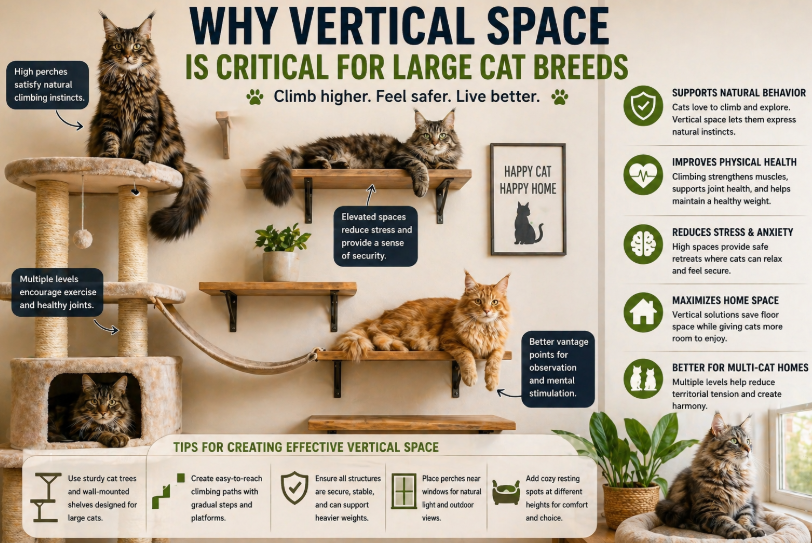
Large cat breeds, such as Maine Coons and Norwegian Forest Cats, often seek elevated areas to observe their environment. Without access to height, they may feel restricted or stressed. As a result, providing vertical space for large cats allows them to satisfy these instincts in a safe and structured way.
In addition, climbing provides mental stimulation. Each jump and movement requires coordination and focus, which keeps the mind engaged. Therefore, vertical access is not just about physical space but also about supporting natural behavior.
How Height Supports Physical Health
Physical activity is essential for maintaining a healthy weight and strong muscles. For large cats, this becomes even more important due to their size and slower metabolism. Vertical movement encourages climbing, jumping, and balancing, which all contribute to better overall fitness.
When vertical space for large cats is available, cats are more likely to stay active throughout the day. Instead of remaining idle, they explore different levels, which naturally increases movement. This helps prevent obesity and reduces the risk of joint issues over time.
Moreover, climbing strengthens core muscles and improves coordination. These benefits are especially valuable as cats age. By maintaining an active routine, you support long-term mobility and reduce health risks. Therefore, adding vertical elements to your home directly contributes to your cat’s physical well-being.
Reducing Stress Through Elevated Spaces
Stress is a common issue for indoor cats, especially in busy households. Loud noises, unfamiliar visitors, or other pets can create tension. However, vertical space for large cats provides a simple and effective way to reduce stress.
Elevated areas act as safe zones where cats can retreat and observe without feeling threatened. From a higher position, they gain a sense of control over their surroundings. This perspective helps them feel more secure and less reactive to changes.
In addition, having multiple levels allows cats to choose their preferred space. This sense of choice is important for emotional stability. When cats feel in control, they are less likely to develop anxiety-related behaviors. Therefore, vertical space plays a key role in maintaining emotional balance.
Creating A Territory That Feels Complete
Cats are territorial animals, and they define their space both horizontally and vertically. When vertical space is missing, their territory feels incomplete. This can lead to frustration, especially for larger breeds that require more room.
By adding vertical space for large cats, you effectively expand their territory without increasing floor space. Shelves, cat trees, and window perches create additional zones for exploration and rest. As a result, your cat feels more satisfied and less confined.
This expanded territory also reduces conflicts in multi-cat households. When each cat has access to different levels, they can avoid competition for space. This helps maintain harmony and prevents aggressive behavior. Therefore, vertical design benefits both individual cats and group dynamics.
Choosing The Right Structures For Big Cats
Not all cat furniture is suitable for large breeds. Standard designs may lack the strength or stability needed to support heavier cats. Therefore, selecting the right structures is essential when building vertical space for large cats.
Strong materials such as solid wood or reinforced platforms provide better support. Wide surfaces allow cats to sit or lie down comfortably without feeling unstable. In addition, secure mounting ensures that shelves and structures remain safe during use.
Height should also be considered carefully. Gradual levels make climbing easier and reduce the risk of injury. By choosing well-designed structures, you create a safer and more functional environment that encourages regular use.
Using Vertical Space In Small Homes
Limited space does not mean you cannot create an effective setup. In fact, vertical space for large cats is especially valuable in smaller homes or apartments. By building upward instead of outward, you maximize the available area.
Wall-mounted shelves, tall cat trees, and corner units can transform unused space into functional zones. These additions do not require large floor areas, making them ideal for compact living environments. At the same time, they provide the movement and stimulation large cats need.
Placement is important as well. Positioning structures near windows adds visual interest, while quiet corners offer peaceful resting spots. With thoughtful planning, even small spaces can support a rich and engaging environment.
Encouraging Daily Activity And Play
Play is essential for both physical and mental health. However, large cats may become less active if their environment does not encourage movement. Vertical space for large cats helps solve this problem by creating opportunities for natural play.
Climbing and jumping become part of everyday activity rather than occasional exercise. Cats move between levels, chase toys, and explore new heights. This continuous engagement keeps them active without requiring constant intervention.
Interactive toys can also be incorporated into vertical setups. Hanging toys or moving objects placed at different heights encourage exploration. As a result, your cat remains stimulated and less likely to develop destructive habits.
Supporting Better Sleep And Relaxation
Rest is just as important as activity, especially for larger cats that need proper support for their bodies. Elevated resting areas provide comfort while allowing cats to observe their surroundings. This combination promotes deeper and more restful sleep.
Vertical space for large cats often includes platforms or beds positioned above ground level. These areas feel safer and more secure, which helps cats relax fully. In addition, being off the floor reduces exposure to noise and disturbances.
Comfortable materials and stable surfaces further enhance the experience. When cats feel supported and secure, they are more likely to use these spaces regularly. Over time, this improves sleep quality and overall well-being.
Long-Term Benefits Of Vertical Living
The advantages of vertical space extend far beyond daily comfort. Over time, a well-designed environment supports both physical and emotional health. Cats become more active, less stressed, and more engaged with their surroundings.
In addition, vertical space for large cats helps prevent behavioral issues. Cats that have outlets for their energy and instincts are less likely to scratch furniture or act out. This creates a more harmonious living environment for both pets and owners.
Consistency is key. Maintaining and updating your setup ensures it continues to meet your cat’s needs. As your cat grows or ages, adjustments may be necessary. By staying attentive, you can provide a space that supports long-term health and happiness.
Conclusion
Vertical space for large cats is not just a luxury; it is a fundamental part of a healthy indoor environment. By supporting natural instincts, encouraging movement, and reducing stress, vertical design transforms your home into a space that truly meets your cat’s needs.
Small changes can make a big difference. Adding shelves, upgrading furniture, or simply rethinking your layout can improve your cat’s daily experience. Over time, these improvements lead to better health, stronger behavior, and a more content pet.
By prioritizing vertical space, you create a home that works with your cat’s instincts rather than against them. This approach not only benefits your cat but also strengthens the bond you share.
FAQ
- Why do large cats prefer high places?
They feel safer and more in control when observing their surroundings from above. - Can vertical setups help reduce unwanted behavior?
Yes, they provide outlets for energy and reduce boredom-related issues. - What type of furniture is best for bigger cats?
Strong, stable structures with wide platforms offer the best support and comfort. - Is vertical space useful in small apartments?
Absolutely, it maximizes limited space while giving cats more room to explore. - How do I encourage my cat to use elevated areas?
Use treats, toys, and gradual introductions to help your cat feel comfortable climbing.