Learning how to read cat food labels is one of the most important skills you can develop as a cat owner. At first glance, packaging can look convincing, with phrases like “natural,” “premium,” or “complete nutrition.” However, these claims do not always reflect the true quality of the food inside. If you rely only on front-label marketing, you may end up choosing products that do not fully support your cat’s health.
Understanding how to read cat food labels allows you to look beyond advertising and focus on real nutritional value. While it may seem complicated at first, the process becomes much easier once you know what to look for. More importantly, this knowledge helps you make confident decisions that directly impact your cat’s long-term well-being.
Most cat owners want the best for their pets, yet confusion around ingredients and labeling often leads to poor choices. Therefore, learning how to read cat food labels is not just helpful, but essential for responsible pet care.
Understanding The Ingredient List
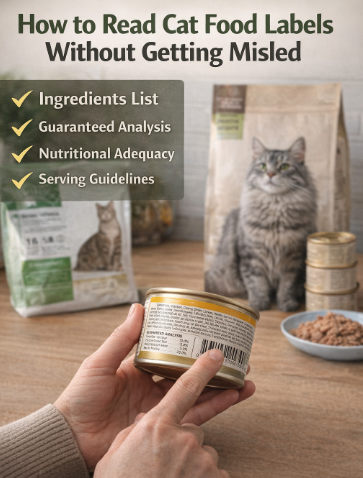
The ingredient list is the first place you should look when you read cat food labels. Ingredients are listed in order by weight, which means the first few items make up the majority of the food. Because of this, the quality of the top ingredients matters more than anything else.
High-quality cat food should list a named animal protein, such as chicken or salmon, as the first ingredient. This indicates that the product is built around a protein source that cats naturally need. On the other hand, vague terms like “meat meal” or “animal by-products” provide less clarity and may signal lower-quality ingredients.
However, it is important to understand that some ingredients appear heavier due to water content. Fresh meat, for example, contains moisture, which can affect its position on the list. Therefore, evaluating the entire ingredient profile gives a more accurate picture than focusing on just the first item.
When you consistently read cat food labels with this perspective, you begin to recognize patterns that separate high-quality products from misleading ones.
Decoding Protein Sources And Quality
Protein is the foundation of a cat’s diet, so it deserves special attention when you read cat food labels. Cats are obligate carnivores, which means they require animal-based protein to thrive. Therefore, identifying the source and quality of protein is essential.
Look for specific names like “chicken,” “turkey,” or “beef.” These indicate clear, identifiable protein sources. In contrast, generic terms like “meat” or “poultry” can be less reliable, as they do not specify the origin.
Protein content percentages can also be misleading. A product may advertise high protein levels, but the source might come from plant-based ingredients rather than animal protein. While plant proteins can contribute to nutrition, they do not provide the same benefits as animal-based sources.
As you continue to read cat food labels, pay attention to how protein is distributed throughout the ingredient list. Multiple protein sources listed early often signal better overall quality.
Recognizing Fillers And Unnecessary Additives
One of the biggest challenges when you read cat food labels is identifying fillers. Fillers are ingredients that add bulk but offer limited nutritional value. Common examples include corn, wheat, and soy.
While these ingredients are not always harmful, excessive amounts can reduce the overall quality of the food. In addition, they may contribute to weight gain or digestive issues in some cats.
Artificial additives are another concern. Colors, flavors, and preservatives are often included to improve appearance or shelf life, but they do not benefit your cat’s health. Instead, natural preservatives such as vitamin E are a better option.
When you read cat food labels carefully, you can quickly spot these unnecessary ingredients and choose products that focus on real nutrition instead.
Understanding Guaranteed Analysis
The guaranteed analysis section provides a breakdown of nutrients such as protein, fat, fiber, and moisture. Although it offers useful information, it does not tell the whole story.
For example, two foods may have similar protein percentages, but the quality of the protein could be very different. Therefore, you should use guaranteed analysis as a guide rather than a final decision factor.
Moisture content is another key detail. Wet food typically contains higher moisture levels, which can help with hydration. Dry food, on the other hand, is more concentrated, so nutrient percentages appear higher.
When you read cat food labels with this understanding, you can interpret these numbers more accurately and avoid common misconceptions.
Marketing Terms That Can Mislead You
Marketing language is one of the most confusing aspects when you read cat food labels. Words like “natural,” “holistic,” or “premium” often sound appealing, but they are not always regulated or clearly defined.
For instance, a product labeled “natural” may still contain processed ingredients. Similarly, “grain-free” does not automatically mean healthier, as some grain-free foods use alternative fillers that offer little benefit.
Another common term is “complete and balanced.” While this indicates the food meets basic nutritional standards, it does not guarantee high-quality ingredients.
Therefore, it is important to rely on the ingredient list and nutritional details rather than front-label claims. As you learn to read cat food labels more critically, these marketing tactics become easier to recognize.
Checking For Nutritional Adequacy Statements
Nutritional adequacy statements provide valuable information about whether the food meets established dietary standards. These statements are often based on guidelines from organizations like AAFCO.
When you read cat food labels, look for phrases indicating that the food is suitable for a specific life stage, such as growth or maintenance. This ensures the product meets the nutritional needs of your cat’s age and condition.
However, not all foods are tested equally. Some are formulated to meet standards, while others are tested through feeding trials. Foods that undergo feeding trials often provide more reliable results.
Understanding this distinction helps you make better decisions and ensures your cat receives proper nutrition.
Portion Sizes And Feeding Guidelines
Feeding guidelines are another important part of the label. These recommendations provide a starting point for how much to feed your cat based on weight and activity level.
However, these guidelines are not one-size-fits-all. Each cat has unique needs, so adjustments may be necessary. Monitoring your cat’s weight and energy levels helps you determine whether the portions are appropriate.
When you read cat food labels regularly, you become more comfortable adjusting feeding amounts to suit your cat’s specific needs.
Building Confidence In Your Choices
As you gain experience, learning to read cat food labels becomes second nature. Instead of feeling overwhelmed, you begin to recognize patterns and make quicker, more informed decisions.
Consistency is key. By applying the same evaluation process each time, you can confidently compare products and choose the best option for your cat. Over time, this approach leads to better health outcomes and fewer dietary issues.
Additionally, staying informed about nutrition trends helps you adapt to new information. The pet food industry continues to evolve, so keeping your knowledge up to date ensures you always make the best choices.
Conclusion
Understanding how to read cat food labels empowers you to make smarter decisions for your pet. By focusing on ingredient quality, protein sources, and nutritional details, you can avoid misleading claims and select food that truly supports your cat’s health.
Although the process may seem complex at first, practice makes it easier. With time, you will develop the confidence to evaluate products quickly and accurately. Ultimately, this knowledge allows you to provide a healthier, more balanced diet that supports your cat’s well-being for years to come.
FAQ
- What is the most important part of a cat food label?
The ingredient list is the most important, as it shows the actual components of the food in order of weight. - Are grain-free cat foods always better?
Not necessarily, as some grain-free options use alternative fillers that may not improve nutrition. - How can I tell if protein quality is good?
Look for clearly named animal sources like chicken or fish rather than vague terms. - Do marketing terms guarantee quality?
No, terms like “premium” or “natural” can be misleading and should not be the main factor in your decision. - Should I follow feeding guidelines exactly?
Use them as a starting point, but adjust portions based on your cat’s weight, activity, and overall health.