Maine Coon personality traits are useful background when you meet the breed, but they do not predict every cat’s preferences. The gentle-giant description should invite you to observe your own Maine Coon, not expect it to enjoy every visitor, cuddle or game. Begin with the individual cat and the choices it makes in a comfortable home arrangement.
This guide connects common breed descriptions with practical observation tasks. It does not promise a temperament or diagnose behaviour. This is general care information, not veterinary advice; consult a qualified veterinarian about a sudden behaviour change or concern about comfort. For difficult introductions or handling, ask for appropriate professional support.
Read breed descriptions as a starting point
The Cat Fanciers’ Association’s Maine Coon page describes the breed as gentle, easygoing and active. Its account includes sociability, play and vocal sounds such as chirps and trills. These are breed-level descriptions. They do not establish how a particular cat will behave in your household or whether it will prefer sitting on a lap.
When a description says sociable, turn it into a question you can observe: does this cat choose to remain nearby, approach for contact or interact through play? Those choices can differ between occasions. Avoid treating the cat as less affectionate because it prefers the next chair to your lap. The important observation is the contact it voluntarily accepts.
Use the same care approach with a kitten or an adopted adult: give it appropriate space, learn its existing routine and let it settle without testing every expected breed trait. A first meeting cannot reveal everything about future behaviour. Ask the previous caregiver which observations apply to this particular cat and which remain uncertain.
Notice proximity without demanding a cuddle
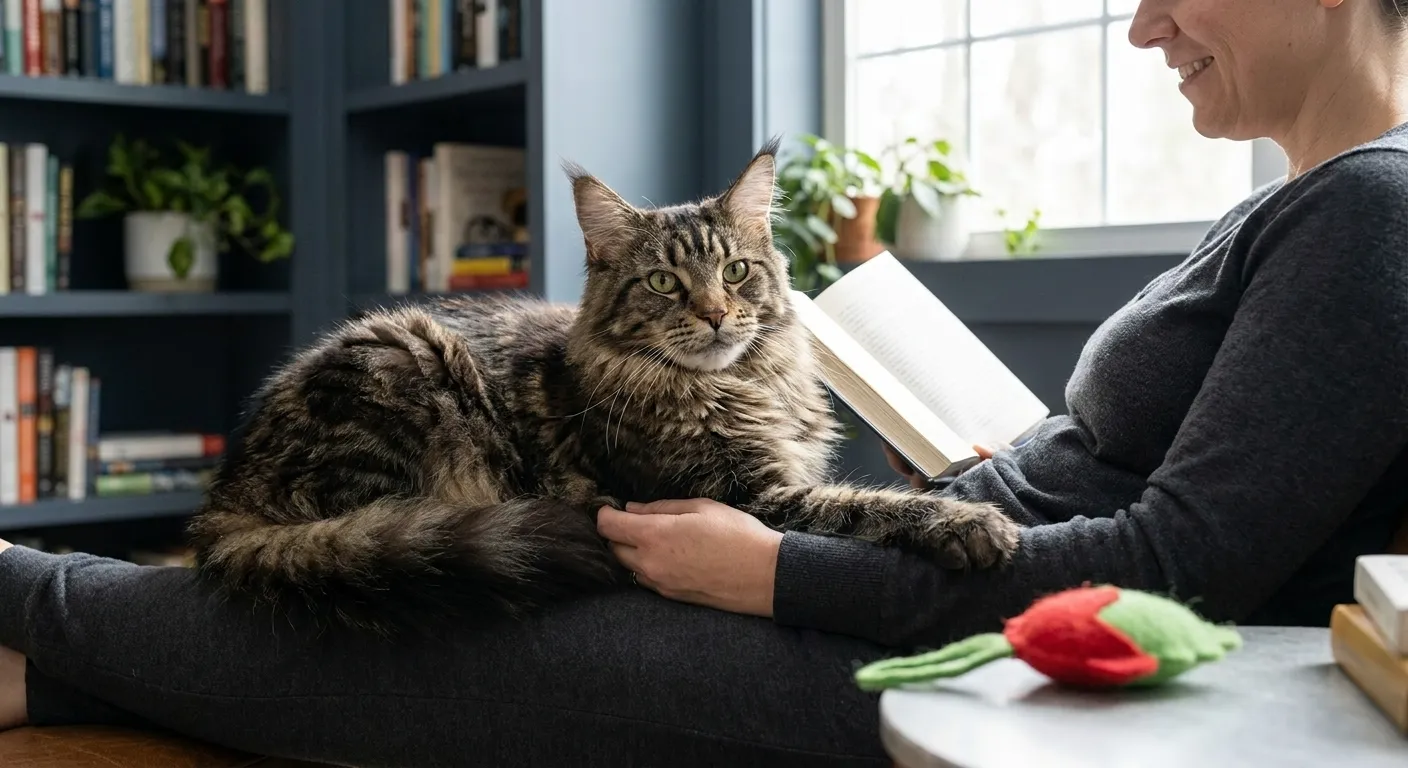
Choose an ordinary quiet moment and sit where the cat can approach or leave. Observe whether it stays nearby, moves past or begins another activity. You do not need to call it repeatedly to produce an affectionate-looking interaction. A cat resting in the same room provides a different observation from one choosing physical contact.
If it approaches, keep the interaction gentle and familiar. Pause after a brief contact and notice whether it remains or moves away. Do not hold it on your lap to see how much touch it will tolerate. If you are unsure about handling, ask the vet or qualified behaviour professional to demonstrate an appropriate approach.
Record the setting rather than a verdict about love or loyalty. An example note might say cat sat beside the chair while room was quiet, then left when visitors arrived. That is a hypothetical illustration of a useful record, not a case study. It describes circumstances you can review without inventing the cat’s thoughts.
Learn the individual play preference
Offer an appropriate toy in a suitable space under supervision. Watch what the cat chooses to do: follow a movement, pause and watch, bat gently or walk away. Do not assume that the breed’s reputation for intelligence means it must perform fetch or solve an elaborate puzzle. The activity should fit the individual cat and its care needs.
Try one change when you want to compare preferences. You might use a different suitable toy on another occasion while keeping the location familiar. Record the action and the response rather than award an intelligence score. A lack of interest in one item does not establish that the cat lacks playfulness.
For food-based activity, ask the vet how any food belongs within the feeding plan. Make the first task accessible and ensure the cat can obtain its appropriate meals. Do not withhold food behind a difficult puzzle to prove problem-solving ability. Equipment described as interactive still needs a suitability and safety check.
Give social contact a practical home setting
RSPCA guidance on the cat’s home environment includes resting places, hiding opportunities, resources and space for activity. These ordinary provisions matter even for a cat described as outgoing. A sociable breed label is not a reason to remove the option of retreating from visitors or household noise.
Walk through the room from the cat’s point of access. Can it reach the rest area without passing a visitor who wants to handle it? Can it approach familiar resources without another pet blocking the route? Describe any problem concretely so you can change the arrangement or discuss it with a professional.
Explain the same rules to guests: allow approach, avoid crowding and leave the retreat available. Children need active adult supervision during interactions. A cat’s size and gentle reputation do not make rough handling appropriate or guarantee that it will accept being carried. Give the family a clear care routine instead of relying on the breed description.
Observe sounds in context
Maine Coon owners may notice chirps, trills and meows, but a sound alone does not reveal one fixed message. Write what happened around it: food preparation, a familiar person’s arrival or a toy being moved. The context is more useful than assigning every trill the meaning happy greeting.
Keep a simple sound-and-situation note if communication interests you. Record the sound in ordinary terms and what the cat did next. Do not repeatedly provoke a response to obtain a recording. You can learn the household pattern without turning the cat’s communication into a performance.
If the pattern changes abruptly or comes with another concern, ask the vet. Do not explain a new physical or behavioural problem as just a talkative breed. The observation record can help you describe what changed, but it should not delay a call when the cat seems unwell or uncomfortable.
Separate familiar routines from new introductions
Living comfortably with the household does not establish readiness to meet an unfamiliar animal. Ask a qualified professional about introductions and prepare appropriate separation and supervision. Do not place a new dog beside the Maine Coon because an article describes the breed as dog-like or generally good with other pets.
Before a planned change, list the existing resources and routines that should remain accessible. Keep food, rest and toileting arrangements clear. Write which rooms or barriers will be used and who will supervise. A practical plan is easier to review than a prediction that the animals will become friends.
Record the actual responses during professionally advised introductions. Avoid interpreting one quiet encounter as proof that unsupervised contact is safe. If either animal appears uncomfortable, pause and seek help. The relevant question is how these individuals are responding, not whether they are fulfilling a breed stereotype.
Handle changes without labelling the cat difficult
Compare a concern with the cat’s ordinary pattern. Has contact changed, has it stopped using a favourite activity, or is a familiar handling task now difficult? Record when the change began and any other observation about eating, movement or rest. Bring that information to the vet rather than deciding it is a personality change.
Keep care tasks within what you have been shown to do safely. Do not investigate a possible painful area through repeated touch or force the cat into its old routine to see whether it improves. Professional assessment can determine what the next step should be. The breed description cannot resolve that question.
Build a small individual profile
Use a few headings: preferred proximity, familiar play, accepted handling, ordinary sounds and useful retreat spaces. Add only observations you can describe. A blank heading means you have not learned that preference yet; it is not a reason to run a stressful test. Share the profile with caregivers so they can follow the familiar arrangement.
Maine Coon personality traits provide an interesting introduction to these gentle giants. Your own cat’s profile makes that background useful. Begin with one quiet observation, respect voluntary contact and keep the home arrangement accessible. Over time, practical details about this cat will guide care more reliably than a promise that every Maine Coon behaves the same way.