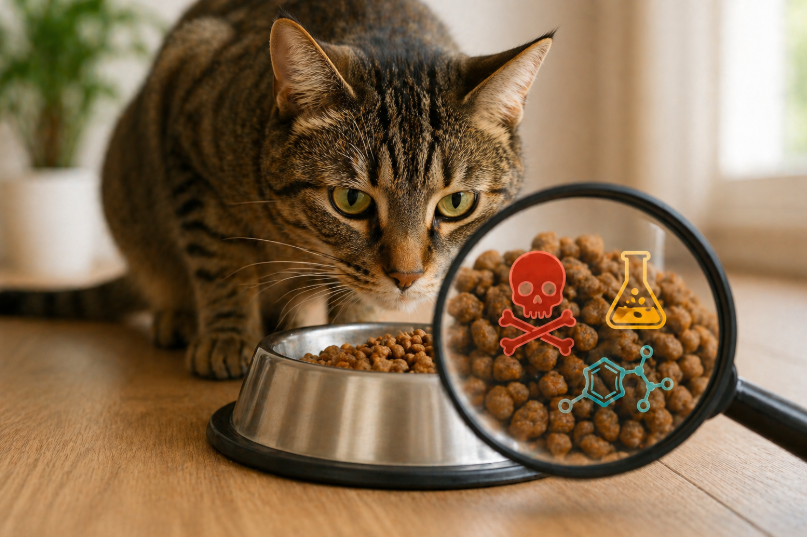
Hidden cat food additives are more common than most pet owners realize, and they can quietly affect your cat’s health over time. While many products claim to provide balanced nutrition, the ingredient list often reveals substances that offer little benefit. In some cases, these additives may even contribute to long-term health issues, making it essential to understand what your cat is really eating.
Cats rely on consistent, high-quality nutrition to maintain energy, digestion, and overall well-being. However, processed foods sometimes include ingredients designed to improve shelf life or reduce costs rather than support health. Therefore, learning to identify hidden cat food additives can help you make better decisions and protect your cat from unnecessary risks.
Why Additives Exist In Commercial Cat Food
Manufacturers often use additives to extend shelf life, enhance flavor, or improve appearance. While some of these substances serve practical purposes, others are included mainly to make the product more appealing to buyers. As a result, hidden cat food additives can appear in foods that seem perfectly safe at first glance.
For example, artificial preservatives help prevent spoilage, allowing products to sit on shelves for longer periods. Similarly, flavor enhancers make lower-quality ingredients taste more appealing to cats. Although these changes may improve convenience, they do not always benefit your cat’s health.
In addition, cost plays a significant role. Lower-quality ingredients are cheaper, so manufacturers may rely on additives to compensate for reduced nutritional value. This means hidden cat food additives often replace or mask better ingredients, which can impact your cat’s diet over time.
Artificial Preservatives To Watch Out For
One of the most concerning types of hidden cat food additives is artificial preservatives. Chemicals such as BHA, BHT, and ethoxyquin are commonly used to keep food fresh. However, these substances have raised concerns due to potential links to long-term health issues.
Although they are approved in limited amounts, repeated exposure may place stress on your cat’s system. Over time, this can affect liver function or immune response. Therefore, many pet owners choose to avoid foods that contain these additives whenever possible.
Natural preservatives, such as vitamin E or plant extracts, provide a safer alternative. These options help maintain freshness without introducing unnecessary chemicals. As a result, switching to foods without synthetic preservatives reduces reliance on hidden cat food additives.
Fillers That Dilute Nutritional Value
Fillers are another common example of hidden cat food additives that can negatively affect your cat’s diet. Ingredients like corn, wheat, and soy are often used to bulk up food, but they do not provide the protein-rich nutrition cats need.
Because cats are obligate carnivores, their bodies are designed to process animal-based proteins. When fillers take up a large portion of the diet, they can reduce overall nutritional quality. This may lead to weight gain, low energy, or digestive discomfort.
In addition, some cats develop sensitivities to these ingredients. Symptoms may include itching, vomiting, or irregular bowel movements. Therefore, limiting foods that rely heavily on fillers helps reduce exposure to hidden cat food additives that offer little benefit.
Artificial Colors And Flavor Enhancers
Artificial colors are frequently added to cat food, even though they serve no purpose for cats themselves. These additives are designed to make food look more appealing to humans. However, they can contribute to unnecessary chemical exposure.
Flavor enhancers are also widely used. While they improve taste, they often mask poor-quality ingredients. As a result, cats may become dependent on these enhanced flavors, making it harder to switch to healthier options.
Some cats may react negatively to these substances, showing signs of digestive upset or skin irritation. Therefore, avoiding foods with artificial colors and flavors reduces the presence of hidden cat food additives in your cat’s diet.
Low-Quality By-Products And Unclear Ingredients
Not all protein sources are equal, and some fall into the category of hidden cat food additives. Meat by-products, for example, can vary greatly in quality. While they may include usable nutrients, they often lack consistency and transparency.
Labels that use vague terms such as “animal meal” or “meat by-product” do not clearly identify the source. This makes it difficult to assess the quality of the ingredient. As a result, your cat may not receive the nutrients needed for optimal health.
Choosing foods with clearly labeled protein sources helps avoid this issue. Ingredients like chicken, turkey, or fish provide more reliable nutrition. Therefore, focusing on transparency reduces reliance on hidden cat food additives that compromise quality.
Hidden Sugars And Excess Carbohydrates
Sugar is not a natural part of a cat’s diet, yet it can still appear in some foods. Ingredients such as corn syrup or molasses are sometimes added to improve flavor. However, they offer no real nutritional value.
Excess carbohydrates are another concern. While small amounts are acceptable, high levels can lead to weight gain and metabolic issues. Cats are not designed to process large quantities of carbs, which makes these additions unnecessary.
Over time, diets high in sugar and carbohydrates may increase the risk of diabetes. Therefore, identifying and avoiding hidden cat food additives in this category is essential for long-term health.
How To Read Labels With Confidence
Understanding food labels is one of the best ways to avoid hidden cat food additives. The first step is to focus on the primary ingredients. High-quality foods should list real meat sources at the top of the list.
In addition, watch for unfamiliar chemical names. These often indicate artificial additives that may not be necessary. Researching these ingredients can help you determine whether they are safe.
Shorter ingredient lists are usually a good sign. They often indicate less processing and fewer unnecessary components. By learning how to read labels effectively, you can reduce exposure to hidden cat food additives and choose better options.
Choosing Cleaner And Safer Cat Food Options
Switching to cleaner food does not have to be difficult. Many brands now focus on natural ingredients and minimal processing. These products avoid hidden cat food additives while still providing balanced nutrition.
Wet food can be a good option, as it often contains fewer preservatives and more moisture. This supports hydration and reduces reliance on artificial ingredients. Combining wet and dry food can create a balanced feeding routine.
Gradual transitions are important when changing diets. Introducing new food slowly helps prevent digestive upset. Over time, your cat can adjust comfortably to healthier options.
Consistency is key. Once you find a food that works well, maintaining that choice supports long-term health. As a result, avoiding hidden cat food additives becomes part of a sustainable routine.
Long-Term Impact On Your Cat’s Health
The effects of hidden cat food additives may not be immediate, but they can build over time. Chronic exposure can contribute to allergies, digestive problems, and reduced energy levels. Therefore, making better choices early can prevent future issues.
In addition, a cleaner diet supports overall vitality. Cats often show improvements in coat condition, digestion, and activity levels when fed higher-quality food. These changes highlight the importance of avoiding unnecessary additives.
Regular monitoring also helps. Paying attention to your cat’s behavior and physical condition can reveal how their diet is affecting them. By staying proactive, you can address problems before they become serious.
Conclusion
Hidden cat food additives can have a significant impact on your cat’s health, even if they are not immediately obvious. By understanding what to look for and making informed choices, you can reduce exposure to unnecessary chemicals and fillers. This not only improves your cat’s diet but also supports their long-term well-being.
Focusing on natural ingredients, clear labeling, and balanced nutrition is the best way to protect your cat. While it may take time to evaluate different options, the benefits are worth the effort. With consistent care, you can create a feeding routine that promotes health, comfort, and longevity.
FAQ
- What are the most harmful ingredients found in cat food?
Artificial preservatives, fillers, and synthetic additives are often considered the most concerning. - Can additives cause long-term health issues in cats?
Yes, some additives may contribute to digestive problems, allergies, or chronic conditions over time. - How can I quickly check if a cat food is safe?
Look for real meat as the first ingredient and avoid foods with long lists of artificial chemicals. - Are natural preservatives better for cats?
Yes, natural options like vitamin E are generally safer than synthetic preservatives. - Should I completely avoid processed cat food?
Not necessarily, but choosing minimally processed options with fewer additives is a better approach.