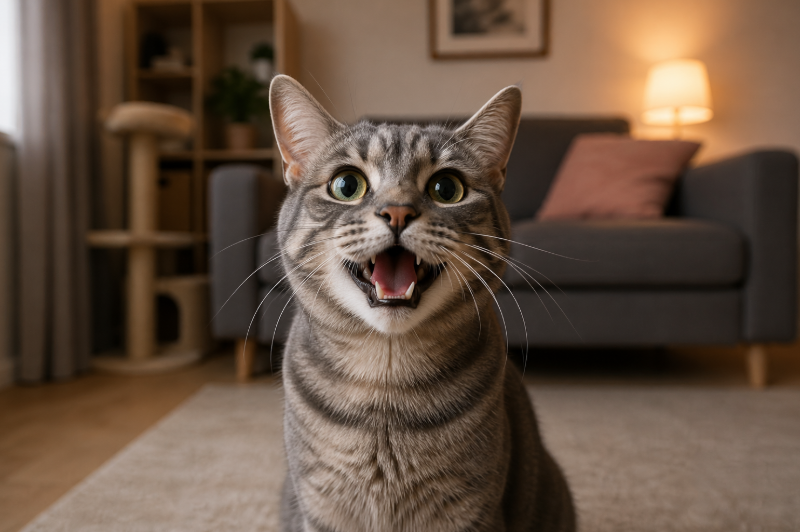
If your cat won’t stop meowing, it can quickly go from mildly annoying to deeply frustrating. While cats naturally communicate through sound, excessive meowing often signals something more important. Understanding the cause is the first step toward restoring peace in your home while keeping your cat happy and healthy.
At first, it might seem like your cat is simply being vocal. However, when the behavior becomes constant, repetitive, or disruptive, there is usually a clear reason behind it. Cats do not meow excessively without purpose. Instead, they are trying to tell you something, and learning to interpret these signals can make a huge difference.
Why Cats Meow More Than Usual
Cats use meowing mainly to communicate with humans rather than other cats. Therefore, when a cat won’t stop meowing, it often means they are trying harder than usual to get your attention. This could be due to unmet needs, changes in their environment, or even emotional stress.
For example, some cats naturally talk more than others. Breeds like Siamese or Oriental cats are known for being highly vocal. However, even typically quiet cats can suddenly become noisy when something is wrong. That is why sudden changes in behavior should never be ignored.
In many cases, the key is not to silence the cat but to understand the message behind the sound. Once you identify the cause, the solution becomes much clearer and more effective.
Hunger And Feeding Habits
One of the most common reasons a cat won’t stop meowing is hunger. Cats quickly learn that vocalizing gets results, especially if you respond by feeding them. Over time, this can create a habit where your cat meows constantly, even when it is not mealtime.
Additionally, inconsistent feeding schedules can make this behavior worse. Cats thrive on routine, so irregular feeding times may lead them to meow more often in anticipation. Even small delays can trigger persistent vocalizing.
To address this, establish a consistent feeding schedule. Feed your cat at the same times every day and avoid giving in to excessive meowing outside those times. Gradually, your cat will learn when to expect food and will meow less frequently.
Seeking Attention And Interaction
Sometimes, a cat won’t stop meowing simply because it wants your attention. Cats can become bored or lonely, especially if they spend long hours alone. In these situations, meowing becomes a way to engage with you.
Moreover, if you respond every time your cat meows, you may unintentionally reinforce the behavior. Your cat learns that meowing equals attention, which encourages them to continue.
Instead, try to provide structured playtime and interaction throughout the day. Use toys, engage in short play sessions, and give your cat mental stimulation. At the same time, avoid rewarding constant meowing with immediate attention. Wait for quiet moments before responding so your cat learns calmer ways to communicate.
Stress And Environmental Changes
Another important reason a cat won’t stop meowing is stress. Cats are sensitive to changes in their environment, and even small disruptions can affect their behavior. Moving to a new home, introducing a new pet, or rearranging furniture can all trigger anxiety.
When cats feel stressed, they may vocalize more as a way to express discomfort or seek reassurance. This type of meowing often sounds more urgent or persistent than usual.
To reduce stress, create a stable and predictable environment. Provide safe spaces where your cat can retreat, and maintain consistent routines. Over time, this helps your cat feel secure, which naturally reduces excessive meowing.
Medical Issues And Health Concerns
If your cat won’t stop meowing suddenly, it is important to consider possible health issues. Pain, illness, or discomfort can cause cats to vocalize more frequently. In some cases, older cats may develop cognitive dysfunction, leading to confusion and increased meowing.
Additionally, conditions such as hyperthyroidism or high blood pressure can cause restlessness and excessive vocalization. These medical problems often require veterinary attention and should not be overlooked.
Therefore, if the behavior appears suddenly or is accompanied by other symptoms like weight loss or changes in appetite, consult your veterinarian. Early detection can prevent more serious complications and help your cat feel better quickly.
Nighttime Meowing Problems
Many pet owners struggle when their cat won’t stop meowing at night. This can be especially frustrating because it disrupts sleep and creates tension in the household. However, nighttime vocalizing often has logical explanations.
Cats are naturally more active during dawn and dusk, which means they may feel energetic when you are trying to rest. If they are bored during the day, this energy builds up and results in nighttime meowing.
To solve this, increase your cat’s activity during the day. Engage in interactive play sessions in the evening to tire them out before bedtime. Feeding your cat a small meal before sleep can also encourage relaxation and reduce nighttime activity.
Territorial Behavior And Mating Instincts
In some cases, a cat won’t stop meowing due to territorial instincts or mating behavior. Unneutered cats are especially prone to loud and persistent vocalizing. Female cats in heat can become extremely vocal, while male cats may meow to attract mates or respond to nearby cats.
This type of meowing is usually louder and more intense than normal communication. It may also be accompanied by restless behavior or attempts to escape the house.
Spaying or neutering your cat is one of the most effective ways to reduce this behavior. Not only does it decrease excessive meowing, but it also improves overall health and prevents unwanted litters.
How To Respond Without Reinforcing Behavior
When your cat won’t stop meowing, your reaction plays a crucial role in shaping future behavior. If you respond inconsistently, your cat may become even more persistent because they are unsure when they will get attention.
Instead, focus on consistent responses. Reward quiet behavior with attention, treats, or affection. Ignore unnecessary meowing whenever possible, especially if it is clearly attention-seeking.
At first, the meowing may increase as your cat tests your response. However, with patience and consistency, the behavior will gradually decrease. Over time, your cat will learn that calm behavior is more effective than constant noise.
Creating A Calm And Stimulating Environment
A well-balanced environment can significantly reduce excessive meowing. When a cat won’t stop meowing, it often lacks mental or physical stimulation. Providing enrichment can make a noticeable difference.
For example, introduce puzzle feeders, climbing structures, and interactive toys. These elements keep your cat engaged and reduce boredom. Additionally, placing a perch near a window allows your cat to observe outdoor activity, which provides natural entertainment.
Routine also plays an important role. Cats feel more secure when they know what to expect. Therefore, maintaining consistent schedules for feeding, play, and rest can help reduce anxiety-driven vocalization.
When To Seek Professional Help
While most cases can be managed at home, there are times when professional help is necessary. If your cat won’t stop meowing despite your efforts, a veterinarian or animal behaviorist can provide deeper insights.
Persistent meowing that does not respond to routine changes may indicate underlying medical or behavioral issues. A professional evaluation ensures that no important factors are overlooked.
Furthermore, behaviorists can offer tailored strategies based on your cat’s personality and environment. This personalized approach often leads to faster and more effective results.
Conclusion
When your cat won’t stop meowing, it is rarely random or meaningless. Instead, it is a form of communication that deserves attention and understanding. By identifying the root cause, whether it is hunger, boredom, stress, or health concerns, you can address the issue effectively.
Consistency, patience, and a calm approach are key to reducing excessive vocalization. Rather than reacting emotionally, focus on creating a stable environment and reinforcing positive behavior. Over time, your cat will learn healthier ways to communicate, leading to a more peaceful and balanced home.
FAQ
1. Why does my cat keep making noise all day?
Cats often vocalize due to hunger, boredom, or a need for attention. Identifying the trigger helps reduce the behavior.
2. Is constant vocalizing a sign of illness?
Yes, sudden or unusual meowing can signal pain or medical issues, so a vet check is recommended.
3. How can I stop nighttime noise from my cat?
Increase daytime activity and provide evening play sessions to reduce nighttime energy and restlessness.
4. Do some breeds naturally talk more than others?
Yes, certain breeds like Siamese cats are known for being more vocal than average.
5. Should I ignore my cat when it keeps calling out?
Ignore attention-seeking behavior but respond to genuine needs to avoid reinforcing excessive vocalizing.