Maine Coon cats are renowned for their intelligence and playful nature, making them surprisingly receptive to training. While often associated with dogs, teaching your feline friend can strengthen your bond and enhance their well-being. Knowing how to train Maine Coon cats can lead to a more harmonious household, whether it’s for basic commands, leash training, or even fun tricks.
The Basics: Positive Reinforcement for Maine Coon Cats
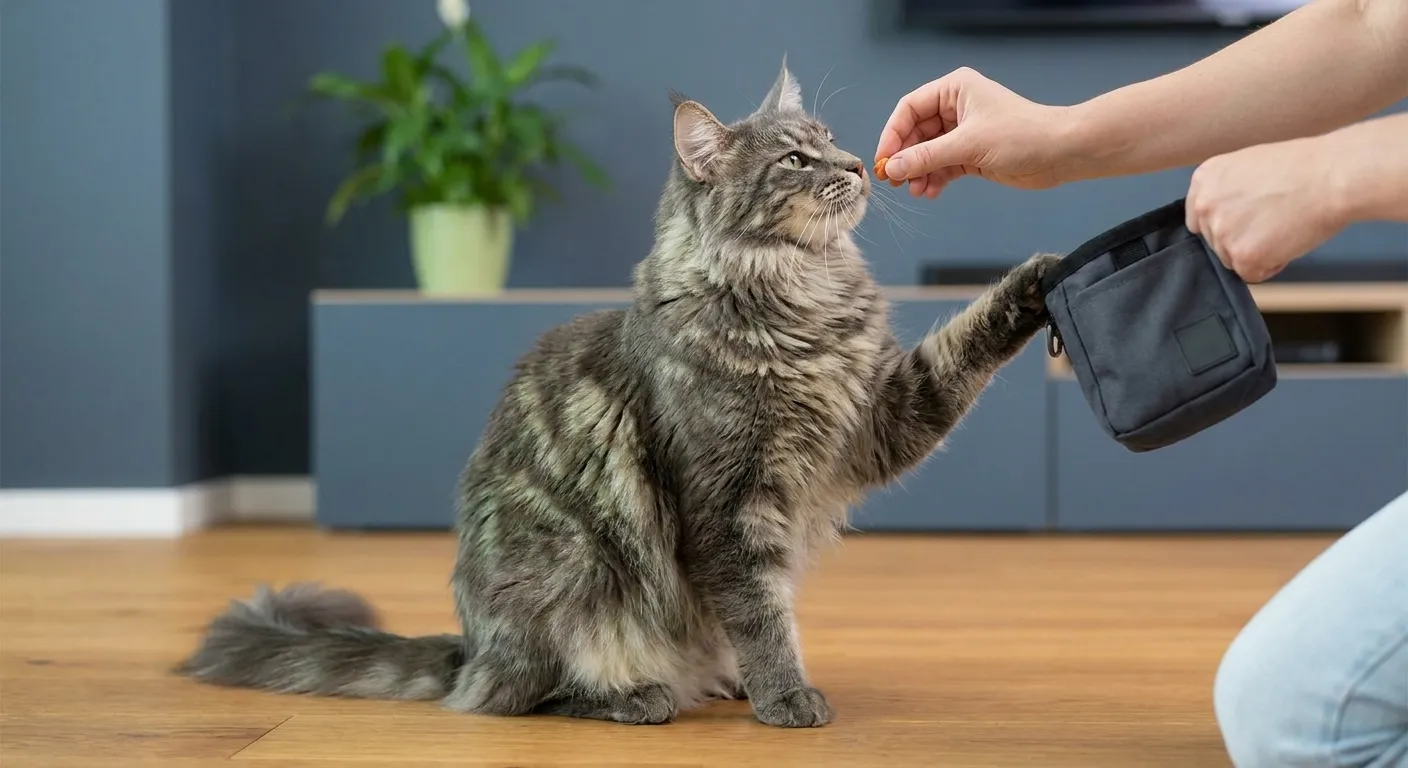
The foundation of successful Maine Coon training lies in positive reinforcement. This means rewarding desired behaviors immediately with treats, praise, or affection. Avoid punishment, as it can create fear and distrust, hindering the learning process. Start with short, frequent training sessions, typically 5-10 minutes, to keep your Maine Coon engaged. Common commands like “sit” can be taught by luring your cat into position with a treat and then immediately rewarding them when they comply. Consistency is key; everyone in the household should use the same commands and rewards. Moreover, patience is a virtue when working with felines. Remember, each cat learns at its own pace.
When beginning, ensure you have high-value treats that your Maine Coon truly enjoys. These could be small pieces of cooked chicken, commercial cat treats, or even a favorite wet food. Furthermore, choose a quiet environment free from distractions. This helps your cat focus solely on the training task. Practice one command at a time until your Maine Coon consistently performs it. Once a behavior is reliably learned, you can gradually introduce new commands. In addition, always end training sessions on a positive note, even if it’s just rewarding a simple behavior they already know.
Beyond Basics: Leash Training and Clicker Work
Many Maine Coons enjoy outdoor adventures, and leash training can provide a safe way to explore. Begin by introducing a comfortable harness indoors, allowing your cat to wear it for short periods before attaching a leash. Once they are accustomed, practice walking in a quiet indoor space, encouraging them with treats. Clicker training is another effective method, using a distinct sound to mark the exact moment your cat performs the correct action, followed by a reward. This precision helps them understand exactly what they’re being rewarded for, making it easier to teach complex behaviors like fetching or coming when called. Therefore, investing in a good clicker and learning its proper use can significantly boost your training efforts.
For leash training, start small. Let your Maine Coon wear the harness for a few minutes while supervised, gradually increasing the time. Never force the harness on them; instead, associate it with positive experiences like mealtime or play. After they are comfortable with the harness, attach the leash and let them drag it around indoors under your watchful eye. Progress to holding the leash and walking short distances inside. Subsequently, when venturing outside, choose a calm, secure area, perhaps your backyard, before exploring busier environments. Always ensure the harness fits snugly to prevent escapes, yet comfortably enough not to chafe. This careful approach helps your Maine Coon associate the harness and leash with enjoyable outings.
Understanding Your Maine Coon’s Learning Style
Maine Coons are highly intelligent, but they learn differently than dogs. They respond best to positive reinforcement and short, engaging sessions. Unlike dogs, they may not perform a trick simply to please you; there must be a clear incentive for them. Consequently, understanding their motivations is crucial. Some Maine Coons are highly food-motivated, while others prefer toys or petting as rewards. Observe your cat’s preferences to tailor your training approach. In fact, their natural curiosity can be a powerful tool in teaching new behaviors. For example, using a laser pointer or a wand toy can effectively guide them into positions for commands.
Furthermore, recognizing their body language is vital. If your Maine Coon shows signs of stress, such as flattened ears, a swishing tail, or trying to escape, end the session immediately. Pushing them too hard can create negative associations with training. Instead, keep it fun and rewarding. Consider their natural behaviors; for instance, their love for climbing can be channeled into specific activities. Teaching them to jump onto a designated perch on command can be a fun and practical trick. This approach respects their feline nature and enhances the learning experience for both of you.
Teaching Essential Commands and Tricks
Beyond basic
Related reading:
- Beyond Bad Breath: Why Maine Coon Dental Hygiene Matters
- 7 Engaging Play Ideas for Your Maine Coon Cat