
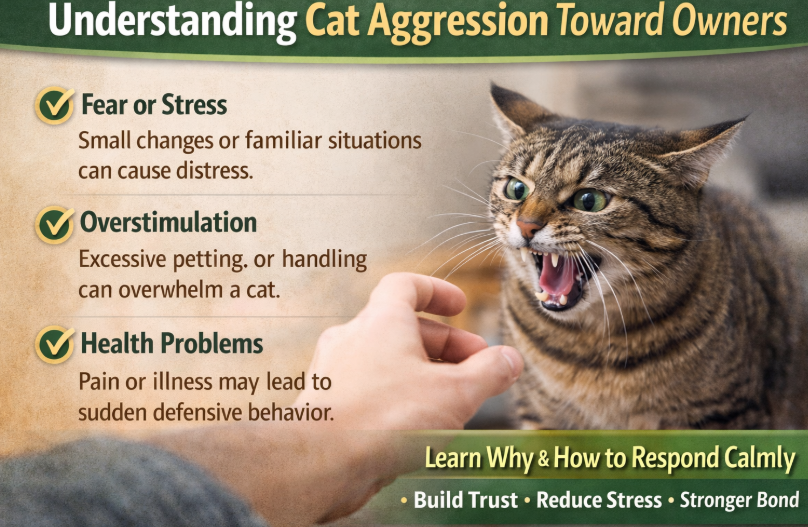
Understanding cat aggression toward owners can feel confusing, especially when your once affectionate pet suddenly starts biting, scratching, or acting defensively. While it may seem personal, this behavior rarely comes from spite. Instead, it usually reflects fear, stress, or unmet needs that your cat cannot communicate in any other way. Once you recognize the root causes, you can begin to address the problem effectively and rebuild trust.
Many cat owners assume aggression appears out of nowhere. However, there are often subtle signs that go unnoticed. For example, tail flicking, flattened ears, or sudden tension in the body can signal discomfort before a cat lashes out. By learning to read these signals early, you can prevent escalation and reduce the chances of aggressive reactions.
Aggression is not always a sign of a “bad” cat. In fact, it is often a normal response to certain triggers. Therefore, understanding the underlying reasons behind cat aggression toward owners allows you to respond with patience rather than frustration. Over time, this approach creates a safer and more peaceful home for both you and your pet.
Common Triggers Behind Aggressive Behavior
One of the most frequent causes of aggression is fear. Cats are naturally cautious animals, and when they feel threatened, they may react defensively. Loud noises, unfamiliar people, or sudden movements can easily trigger this response. As a result, your cat may bite or scratch simply to protect itself.
Another common trigger is overstimulation. While cats enjoy affection, there is a limit to how much they can tolerate. Petting for too long, especially in sensitive areas, can quickly shift from pleasurable to uncomfortable. Consequently, your cat may react with a sudden swipe or bite to signal that it has had enough.
Territorial behavior also plays a major role. Cats often see their home as their domain, so any perceived intrusion can lead to defensive actions. This includes new pets, visitors, or even changes in furniture layout. In these cases, cat aggression toward owners may occur if the cat associates you with the disruption.
Additionally, redirected aggression can happen when a cat becomes agitated by something it cannot reach, such as another animal outside the window. Instead of attacking the real source, the cat may turn its frustration toward the nearest person. This type of behavior can be surprising, but it follows a clear pattern once you understand it.
The Role Of Stress And Environment
Stress is a major factor that contributes to cat aggression toward owners. Even small changes in routine can affect a cat’s emotional state. For instance, moving to a new home, changing feeding schedules, or introducing new pets can create anxiety.
Cats thrive on consistency, so disruptions often lead to behavioral changes. When a cat feels overwhelmed, it may resort to aggression as a coping mechanism. Therefore, maintaining a stable environment is essential for reducing stress-related behavior.
Lack of stimulation can also contribute to aggression. Indoor cats, in particular, may become bored without enough physical and mental activity. Over time, this frustration can build up and manifest as aggressive behavior toward their owners.
Providing enrichment activities can make a significant difference. Interactive toys, climbing structures, and regular play sessions help release pent-up energy. As a result, your cat becomes more relaxed and less likely to act out aggressively.
How Health Issues Can Influence Behavior
Sometimes, aggression is linked to underlying health problems. Pain or discomfort can make even the most gentle cat react defensively. For example, conditions like arthritis, dental issues, or injuries may cause your cat to lash out when touched.
If your cat suddenly becomes aggressive without a clear reason, it is important to consider a medical cause. A visit to the veterinarian can help rule out health issues and ensure your cat receives proper care.
Hormonal factors may also play a role. Unneutered cats are often more prone to aggressive behavior due to increased territorial instincts. In many cases, spaying or neutering can reduce these tendencies and improve overall behavior.
Ignoring health-related causes can make the problem worse. Therefore, addressing medical concerns early is a key step in managing cat aggression toward owners effectively.
Practical Ways To Reduce Aggression
Addressing aggression requires a calm and consistent approach. First, avoid punishment, as it can increase fear and worsen the behavior. Instead, focus on understanding your cat’s triggers and removing or minimizing them.
Creating safe spaces is another helpful strategy. Cats need areas where they can retreat and feel secure. Providing a quiet corner or elevated perch allows your cat to relax without feeling threatened.
Positive reinforcement works well when encouraging better behavior. Reward calm interactions with treats or gentle praise, so your cat begins to associate positive experiences with being around you. Over time, this approach strengthens trust and reduces defensive reactions.
In addition, establish a predictable routine. Feeding, playtime, and rest should occur at consistent times each day. This structure helps your cat feel more secure and less anxious, which can significantly reduce aggressive tendencies.
When dealing with cat aggression toward owners, patience is essential. Behavior changes take time, so gradual progress is more realistic than immediate results. However, consistent effort often leads to lasting improvements.
Building Trust And Strengthening Your Bond
Rebuilding trust after aggressive incidents requires careful interaction. Start by respecting your cat’s boundaries and avoiding forced contact. Let your cat approach you on its own terms, which helps rebuild confidence.
Use interactive play as a way to reconnect. Toys like feather wands or laser pointers allow your cat to release energy without directing aggression toward you. At the same time, these activities create positive associations with your presence.
Body language plays a crucial role in communication. Slow blinking, relaxed posture, and gentle movements can signal that you are not a threat. Over time, your cat will respond by becoming more comfortable and less defensive.
Consistency remains key throughout this process. By maintaining a calm and predictable approach, you create an environment where your cat feels safe. As a result, incidents of cat aggression toward owners gradually decrease.
When To Seek Professional Help
In some cases, aggression may persist despite your efforts. If the behavior becomes severe or dangerous, seeking professional guidance is the best option. Animal behaviorists or veterinarians can provide tailored strategies based on your cat’s specific needs.
Early intervention often leads to better outcomes. Therefore, do not wait until the problem escalates. Addressing aggression promptly helps prevent long-term issues and protects both you and your pet.
Professional support can also identify triggers you may have missed. With expert guidance, you can implement more effective solutions and restore harmony in your home.
Conclusion
Understanding cat aggression toward owners is the first step toward resolving it. While the behavior can be frustrating, it is often a sign that your cat is trying to communicate discomfort, fear, or stress. By identifying triggers, maintaining a stable environment, and using positive reinforcement, you can significantly reduce aggressive tendencies.
Building a strong relationship with your cat takes time, patience, and consistency. When you respond with empathy instead of punishment, you create a foundation of trust that leads to long-term improvement. With the right approach, your cat can feel safe, relaxed, and more connected to you every day.
FAQ
- Why does my cat suddenly become aggressive?
Sudden aggression is often caused by stress, fear, or pain. Identifying changes in environment or health can help explain the behavior. - Can stress cause behavioral issues in cats?
Yes, stress is a major factor and can lead to defensive or aggressive reactions if not managed properly. - How can I calm an aggressive cat safely?
Use gentle movements, avoid direct confrontation, and provide a quiet space where your cat can relax. - Is it normal for cats to bite during play?
Mild biting can occur during play, but consistent rough behavior may require redirection with toys. - When should I seek help for aggressive behavior?
If the behavior becomes frequent, severe, or unpredictable, consult a veterinarian or animal behaviorist for guidance.