
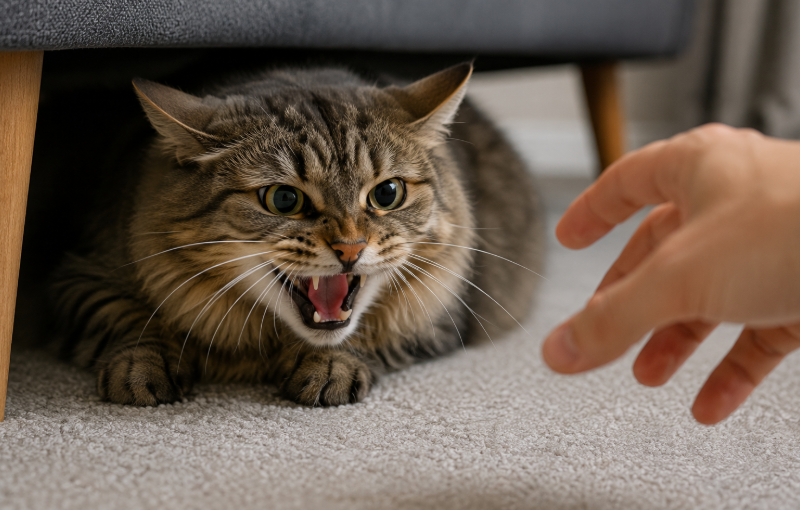
Many cat owners are surprised when a normally quiet pet suddenly hisses, swats, growls, or bites. In many cases, these reactions are not signs of dominance or bad behavior. Instead, they are responses to fear. Understanding fear based aggression cats display is essential for building trust and preventing stressful situations. While aggression can seem alarming, it often reflects a cat’s attempt to protect itself from something it perceives as threatening.
Cats are naturally cautious animals. Their survival instincts encourage them to avoid danger whenever possible. However, when escape does not seem like an option, some cats react defensively. As a result, aggression becomes a tool they use to create distance from perceived threats. This behavior may involve vocal warnings, defensive postures, or physical actions such as scratching and biting.
Fear-related aggression can affect cats of any age, breed, or background. Some animals are naturally more confident, while others are highly sensitive to environmental changes. Therefore, understanding the root causes can help owners respond appropriately and support their pet’s emotional well-being.
Recognizing the difference between fear and hostility is especially important. A frightened cat is not trying to be difficult. Instead, it is responding to stress in the only way it believes will keep it safe. Consequently, identifying triggers and reducing anxiety often leads to significant improvements.
Why Fear Triggers Aggressive Behavior
Fear is a powerful survival mechanism. In the wild, hesitation during dangerous situations can have serious consequences. Therefore, cats have evolved to react quickly when they sense potential threats.
When discussing fear based aggression cats often demonstrate, it helps to understand the body’s natural stress response. A frightened cat experiences a surge of stress hormones that prepare it for action. This reaction is commonly known as the fight, flight, or freeze response.
Whenever possible, cats prefer to flee. Running away allows them to avoid confrontation and find safety. However, escape is not always available. A cat cornered in a room, trapped in a carrier, or approached too quickly may feel it has no choice but to defend itself.
The intensity of fear can vary. Some cats react strongly to unfamiliar people, while others become stressed by loud noises, new environments, or unexpected movements. Consequently, the same situation may produce different responses depending on the individual cat.
Fear-based reactions are often misunderstood because they can appear sudden. In reality, many cats display subtle warning signals before aggression occurs. Learning to recognize these signals helps owners intervene before situations escalate.
A fearful cat may flatten its ears, crouch low to the ground, puff its fur, or widen its eyes. These physical cues communicate discomfort and a desire for distance. Therefore, respecting those warnings is an important part of preventing conflict.
Early Life Experiences and Socialization
A cat’s early experiences play a major role in shaping behavior. Kittens go through a critical socialization period during which they learn how to interact with people, animals, and their environment.
Many cases of fear based aggression cats develop later in life can be traced back to limited social exposure during kittenhood. When young cats encounter a variety of experiences in a safe and positive way, they often grow into more confident adults.
Conversely, kittens raised with minimal human interaction may remain wary of people. Likewise, animals exposed to frightening experiences during development can become more sensitive to potential threats.
Rescue cats sometimes arrive with unknown histories. Some may have experienced neglect, abandonment, or traumatic events before adoption. As a result, they may require additional patience while learning to trust their new environment.
Socialization does not end after kittenhood. Positive experiences throughout life continue to influence behavior. Therefore, consistent and gentle interactions help reinforce confidence and reduce anxiety.
Owners should remember that trust develops gradually. Pushing a fearful cat into uncomfortable situations often increases stress rather than building confidence. Instead, allowing the cat to approach at its own pace typically produces better results.
Environmental Factors That Create Fear
A cat’s environment has a significant impact on emotional health. Even small changes can influence how safe or vulnerable a cat feels.
One common cause of fear based aggression cats show is environmental instability. Cats generally prefer predictable routines and familiar surroundings. Therefore, sudden changes can trigger anxiety.
Moving to a new home often creates stress. Unfamiliar smells, sounds, and layouts require adjustment. Consequently, some cats become defensive until they feel secure in their new environment.
Household noise can also contribute to fear. Vacuum cleaners, construction work, loud music, and unexpected sounds may overwhelm sensitive animals. While some cats adapt quickly, others remain cautious for extended periods.
Visitors frequently represent another source of stress. New people bring unfamiliar scents, voices, and behaviors. As a result, some cats hide while others react aggressively if they feel threatened.
Changes involving other pets deserve attention as well. Introducing a new cat or dog can disrupt established routines and territorial boundaries. Therefore, gradual introductions are essential for reducing stress.
Limited access to safe hiding places may further increase anxiety. Cats rely on secure retreat areas when they feel vulnerable. Without these options, fear can intensify and lead to defensive behavior.
Medical Conditions and Fear Responses
Behavior changes should never be evaluated without considering health. Pain and illness can significantly affect how a cat reacts to its surroundings.
In some situations, fear based aggression cats display may actually be linked to discomfort. A cat experiencing pain often becomes more protective and less tolerant of handling. Consequently, normal interactions may trigger defensive reactions.
Dental disease, arthritis, injuries, and neurological conditions can all influence behavior. Even minor discomfort may lower a cat’s threshold for stress.
Vision and hearing changes can create additional challenges. Cats that cannot accurately interpret their surroundings may become startled more easily. Therefore, age-related sensory decline sometimes contributes to fearful behavior.
Hormonal and metabolic disorders may also affect emotional responses. Because of this, veterinary evaluation is important whenever aggression appears suddenly or intensifies unexpectedly.
Owners sometimes assume behavior problems are purely emotional when a medical issue is actually involved. Fortunately, addressing underlying health concerns often improves both comfort and behavior.
Routine veterinary examinations provide valuable opportunities to identify potential problems early. As a result, they play an important role in managing aggression and supporting overall well-being.
Recognizing Warning Signs Before Aggression Occurs
Most cats provide warning signals before becoming aggressive. Learning to recognize these signs can prevent many negative interactions.
Understanding fear based aggression cats exhibit requires careful observation of body language. Cats communicate extensively through posture, facial expressions, and movement.
Flattened ears often indicate discomfort. Similarly, a lowered body position may signal fear and uncertainty. A tucked tail or puffed fur can suggest elevated stress levels.
Eye changes are also important. Dilated pupils frequently accompany anxiety. Additionally, intense staring may indicate that a cat feels threatened and is monitoring a situation closely.
Vocalizations provide valuable clues. Growling, hissing, and low rumbling sounds are often requests for space. Therefore, these signals should never be ignored.
Some cats freeze before reacting. Others retreat to hidden locations or avoid interaction entirely. Consequently, aggression is not always the first sign of fear.
Recognizing these warnings allows owners to modify situations before physical conflict occurs. As a result, both cats and people remain safer.
How To Reduce Fear and Build Confidence
Helping a fearful cat requires patience, consistency, and understanding. Quick solutions rarely work because trust develops gradually over time.
When addressing fear based aggression cats demonstrate, the first goal should be reducing exposure to triggers whenever possible. Creating a calm environment allows the cat to feel more secure.
Safe spaces are particularly important. Elevated perches, covered beds, and quiet rooms provide opportunities for retreat. Consequently, cats gain greater control over their surroundings.
Positive reinforcement can be highly effective. Rewarding calm behavior with treats, toys, or praise helps create positive associations. Therefore, cats begin to view previously stressful situations more favorably.
Predictable routines support emotional stability as well. Consistent feeding schedules, play sessions, and interactions reduce uncertainty. As a result, many cats become more relaxed.
Owners should avoid punishment entirely. Yelling, spraying water, or forcing interactions often increases fear. Consequently, these approaches may worsen aggression rather than improve it.
Gradual desensitization can help with specific triggers. By introducing stressful stimuli slowly and pairing them with positive experiences, cats can learn new emotional responses over time.
Professional assistance may be valuable in severe cases. Veterinary behaviorists and certified feline behavior consultants can develop customized plans tailored to individual needs.
The Importance of Building Trust
Trust serves as the foundation of every healthy relationship between cats and their owners. Without trust, fear remains difficult to overcome.
Many examples of fear based aggression cats display begin to improve once they feel safe and understood. Therefore, patience becomes one of the most important tools available to owners.
Building trust often involves respecting boundaries. Allowing a cat to initiate contact helps reduce pressure and promotes confidence. Likewise, observing body language prevents accidental stress.
Interactive play can strengthen bonds while encouraging positive experiences. Hunting-style games satisfy natural instincts and provide healthy outlets for energy. Consequently, many cats become more comfortable around people through regular play.
Small successes should be celebrated. Progress may occur gradually, especially in cats with difficult histories. However, consistent positive interactions often produce meaningful improvements over time.
Trust does not eliminate fear completely. Nevertheless, it helps cats recover more quickly from stressful situations and reduces the likelihood of defensive aggression.
Conclusion
Understanding fear based aggression cats display is essential for creating a safe and supportive environment. Although aggressive behavior can seem intimidating, it is often rooted in insecurity rather than hostility. Cats rely on defensive responses when they believe they have no other option.
Early experiences, environmental stress, medical conditions, and individual temperament all influence how cats respond to fear. Fortunately, most cases can improve through patience, observation, and thoughtful management. Recognizing warning signs, reducing stressors, and building trust are powerful steps toward positive change.
Every cat deserves the opportunity to feel safe in its environment. By approaching fearful behavior with compassion rather than punishment, owners can strengthen their relationship with their pets and encourage lasting confidence. Ultimately, understanding fear based aggression cats experience leads to healthier, happier, and more secure feline companions.
FAQ
1. Can a frightened cat become aggressive without warning?
Most cats show warning signs first, including flattened ears, hissing, crouching, or avoidance behaviors.
2. Is fear related behavior common in rescue cats?
Yes. Rescue cats may have experienced stressful situations that influence their reactions and confidence levels.
3. Should I comfort my cat during stressful situations?
Gentle reassurance can help, but it is important to respect your cat’s need for space when it feels overwhelmed.
4. Can medical problems contribute to defensive behavior?
Absolutely. Pain, illness, and sensory changes can increase stress and make aggressive reactions more likely.
5. When should I seek professional help?
Consult a veterinarian or feline behavior specialist if aggression becomes severe, frequent, or difficult to manage safely.