
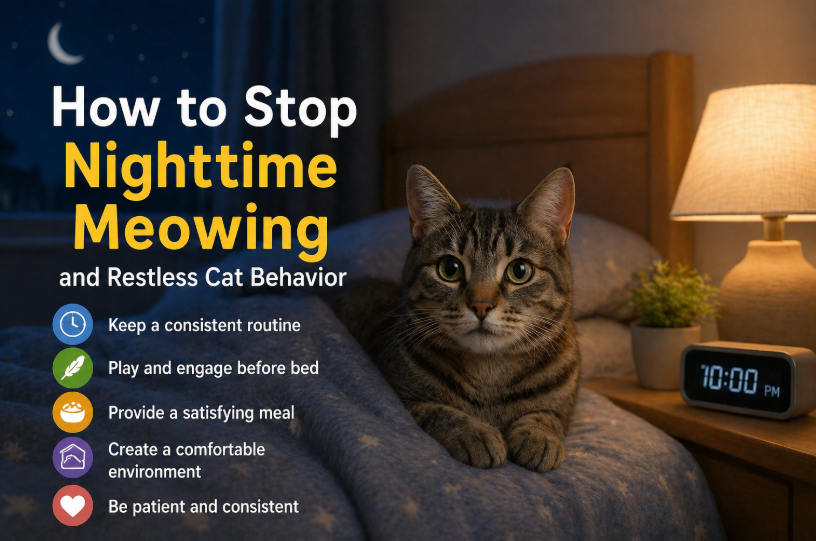
If you are trying to stop nighttime meowing, you are not alone. Many cat owners struggle with restless behavior that disrupts sleep and creates frustration. While it may feel like your cat is being difficult on purpose, the truth is usually far more logical. Cats are naturally active at night, and their behavior often reflects unmet needs rather than bad habits.
At first, the constant noise can seem overwhelming. However, when you take a closer look, you will notice patterns that explain why it happens. By understanding these patterns, you can begin to stop nighttime meowing in a way that feels natural for both you and your cat. With patience and consistency, peaceful nights become much easier to achieve.
Why Cats Become Active At Night
To effectively stop nighttime meowing, it helps to understand your cat’s natural instincts. Cats are crepuscular animals, which means they are most active during dawn and dusk. This behavior comes from their hunting instincts, where early morning and evening are prime times to find prey.
As a result, your cat may feel energetic just as you are trying to sleep. If your cat spends most of the day resting, it will naturally build up energy. This energy then turns into nighttime activity, including vocalizing, running, and seeking attention.
Additionally, indoor cats often lack stimulation during the day. Without enough mental and physical activity, they may look for ways to entertain themselves at night. Therefore, the goal is not just to stop nighttime meowing, but to balance your cat’s daily routine.
Unmet Needs That Trigger Nighttime Noise
One of the most common reasons owners try to stop nighttime meowing is hunger. Cats quickly learn that vocalizing can lead to food, especially if you have responded in the past. Over time, this becomes a learned behavior that continues every night.
Another factor is attention. If your cat feels lonely or bored, it may use meowing as a way to interact with you. Even negative attention can reinforce the behavior, which makes it harder to break the cycle.
In some cases, stress or anxiety plays a role. Changes in the home, new pets, or unfamiliar sounds can make your cat feel uneasy. When this happens, nighttime becomes a period of heightened alertness, leading to increased vocalization.
Create A Structured Daily Routine
If you want to stop nighttime meowing, consistency is one of the most powerful tools you have. Cats feel more secure when they know what to expect, so creating a structured routine can reduce anxiety and restlessness.
Start by setting regular times for feeding, play, and rest. Feeding your cat at the same times each day helps regulate its internal clock. This predictability reduces the urge to wake you up at night.
In addition, consistency builds trust. When your cat understands that its needs will be met, it becomes less likely to demand attention through meowing. Over time, this routine helps you naturally stop nighttime meowing without forcing sudden changes.
Increase Daytime And Evening Activity
A tired cat is a quiet cat, especially when you are trying to stop nighttime meowing. Increasing your cat’s activity during the day helps burn off excess energy that would otherwise surface at night.
Interactive play sessions are especially effective. Use toys that mimic prey, such as feather wands or laser pointers, to engage your cat’s hunting instincts. Short, frequent sessions work better than long, occasional ones.
Evening play is particularly important. By engaging your cat before bedtime, you help shift its active period earlier. After play, offer a meal to mimic a natural hunt-eat-sleep cycle. This combination can significantly reduce nighttime restlessness.
Avoid Reinforcing The Behavior
When trying to stop nighttime meowing, your response matters more than you might think. If you get up, talk to your cat, or provide food during the night, you may unintentionally reinforce the behavior.
Cats learn quickly, and even one response can encourage them to repeat the behavior. Therefore, it is important to remain consistent. Ignore the meowing if you are confident that your cat’s needs are already met.
At first, the behavior may increase. This is known as an extinction burst, where your cat tries harder to get a response. However, if you stay consistent, the meowing will gradually decrease as your cat learns that it no longer works.
Create A Comfortable Sleep Environment
Another effective way to stop nighttime meowing is by improving your cat’s sleep environment. A comfortable and secure space can encourage your cat to rest instead of roam.
Provide a cozy bed in a quiet area of your home. Some cats prefer elevated spaces, while others feel safer in enclosed areas. Experiment to find what works best for your cat.
Additionally, consider environmental factors such as temperature and lighting. A calm, dimly lit space can promote relaxation. White noise or soft sounds can also help mask sudden noises that might trigger activity.
Address Medical Or Age Related Issues
If you cannot stop nighttime meowing despite your efforts, it may be time to consider medical causes. Older cats, in particular, may develop conditions that affect their sleep patterns and behavior.
Cognitive decline can cause confusion, especially at night. Cats may become disoriented and vocalize more frequently. Similarly, pain or discomfort can lead to restlessness and increased meowing.
Therefore, if the behavior appears suddenly or worsens over time, consult your veterinarian. Identifying and treating underlying issues can make a significant difference in your cat’s comfort and behavior.
Use Natural Calming Techniques
Natural calming methods can support your efforts to stop nighttime meowing. These techniques help reduce stress and create a more relaxed environment for your cat.
Pheromone diffusers are a popular option. They mimic natural signals that promote a sense of safety and familiarity. Many cats respond positively to these products over time.
In addition, calming music or gentle background noise can reduce sensitivity to sudden sounds. Some owners also find that gentle grooming before bedtime helps relax their cat. These small adjustments can have a noticeable impact.
Gradually Adjust Your Cat’s Schedule
If your cat’s routine is completely out of sync, gradual changes are more effective than sudden ones. To stop nighttime meowing, shift feeding and playtimes slowly toward the evening.
For example, move dinner time slightly later each day until it aligns with your bedtime routine. Combine this with evening play to encourage your cat to settle down afterward.
This gradual approach prevents stress and allows your cat to adapt naturally. Over time, your cat’s internal clock will adjust, leading to quieter nights.
Be Patient And Stay Consistent
Learning how to stop nighttime meowing takes time and consistency. While it may be tempting to look for quick fixes, long-term results come from steady habits and clear boundaries.
Every cat is different, so progress may vary. Some cats respond quickly, while others need more time to adjust. The key is to remain patient and avoid changing your approach too often.
Consistency builds understanding. When your cat learns what to expect, it becomes easier to manage its behavior. This steady progress leads to lasting improvements and more restful nights.
Conclusion
When you work to stop nighttime meowing, you are not just solving a problem. You are improving your cat’s overall well-being and creating a more balanced routine. By addressing the root causes, you can reduce restlessness and build a stronger connection with your pet.
Although the process requires patience, the results are worth it. A calm, well-adjusted cat leads to better sleep and a more peaceful home. With the right approach, you can turn noisy nights into quiet, restful ones for both you and your cat.
FAQ
1. Why does my cat make noise at night?
Cats are naturally active at night, and noise often comes from boredom, hunger, or attention-seeking behavior.
2. How long does it take to fix nighttime behavior?
It can take a few weeks, depending on consistency and how quickly your cat adapts to new routines.
3. Should I feed my cat during the night?
No, feeding at night reinforces the behavior and encourages your cat to keep waking you.
4. Can anxiety cause nighttime restlessness?
Yes, stress and environmental changes can increase nighttime activity and vocalization.
5. Do calming products really help cats relax?
Many cats respond well to pheromones and calming environments, especially when combined with routine changes.