
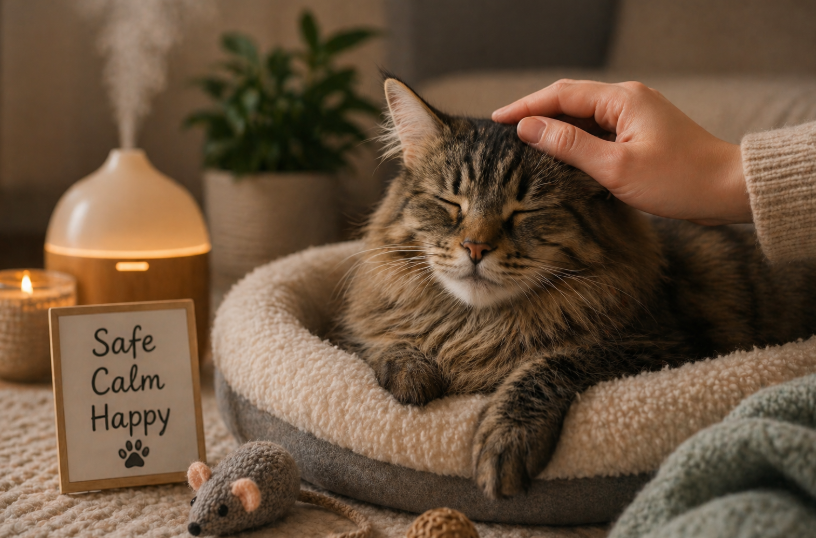
Learning how to calm an anxious cat is one of the most important skills any cat owner can develop. When a cat feels stressed or fearful, its behavior often changes in ways that can be confusing or even frustrating. However, anxiety in cats is usually a response to something in their environment, and with the right approach, it can be managed effectively.
At first, it may seem like your cat is simply acting out. Yet, when you look closer, you will notice subtle signs that reveal deeper discomfort. By understanding these signals early, you can respond in a way that builds trust and creates a sense of safety. Over time, this approach not only reduces anxiety but also strengthens your bond with your pet.
Understanding Why Cats Become Anxious
To calm an anxious cat successfully, you need to understand what causes the anxiety in the first place. Cats are naturally sensitive animals, and even small changes can trigger stress. For example, moving furniture, introducing a new pet, or changing routines can all lead to anxious behavior.
In addition, cats rely heavily on familiarity. When something disrupts their sense of control, they may react by hiding, vocalizing, or becoming more aggressive. These behaviors are not random. Instead, they are your cat’s way of coping with uncertainty.
Moreover, past experiences can also play a role. Cats that were not properly socialized or that experienced trauma may be more prone to anxiety. Recognizing this helps you approach the situation with patience and empathy, which is essential when trying to calm an anxious cat.
Recognizing The Signs Of Stress Early
Before you can calm an anxious cat, you must be able to recognize the signs of anxiety. These signs are often subtle, especially in the early stages. However, paying attention to small changes can make a big difference.
Common signs include excessive grooming, hiding, reduced appetite, and sudden aggression. Some cats may also become more vocal, while others withdraw completely. Each cat expresses anxiety differently, so it is important to observe your pet’s unique behavior patterns.
Additionally, body language provides valuable clues. Flattened ears, a tucked tail, and wide eyes often indicate fear or stress. When you notice these signals, it is a clear sign that your cat needs support and reassurance.
Create A Safe And Predictable Environment
One of the most effective ways to calm an anxious cat is by creating a stable and predictable environment. Cats feel more secure when they know what to expect, so consistency is key. Feeding, playtime, and sleep routines should remain as regular as possible.
Furthermore, providing safe spaces allows your cat to retreat when it feels overwhelmed. This could be a quiet corner, a covered bed, or a high perch. Having a dedicated space helps your cat feel in control and reduces stress levels.
In addition, minimizing sudden changes can prevent anxiety from escalating. If changes are necessary, introduce them gradually. This approach gives your cat time to adjust and reduces the likelihood of stress-related behavior.
Use Gentle Interaction And Positive Reinforcement
When trying to calm an anxious cat, your interaction style matters greatly. Loud noises or sudden movements can increase fear, so it is important to stay calm and gentle. Approach your cat slowly and allow it to come to you when it feels ready.
Positive reinforcement is another powerful tool. Reward calm behavior with treats, praise, or gentle petting. This helps your cat associate relaxation with positive experiences. Over time, this reinforces calm behavior and reduces anxiety.
However, avoid forcing interaction. If your cat is hiding or showing signs of stress, give it space. Respecting your cat’s boundaries builds trust and makes it easier to calm an anxious cat in the long run.
Engage Your Cat With Enrichment Activities
Mental and physical stimulation play a key role in reducing anxiety. When you actively engage your cat, you help redirect its energy in a positive way. Interactive toys, puzzle feeders, and climbing structures can all provide valuable stimulation.
Additionally, regular play sessions strengthen your bond and give your cat an outlet for stress. Play mimics hunting behavior, which is both natural and satisfying for cats. As a result, it helps them feel more relaxed and confident.
Moreover, environmental enrichment can make a big difference. Placing a perch near a window allows your cat to observe the outside world. This simple change can reduce boredom and support your efforts to calm an anxious cat.
Natural Calming Techniques That Work
There are several natural methods you can use to calm an anxious cat without relying on medication. These techniques are gentle, effective, and easy to incorporate into your daily routine.
For example, pheromone diffusers mimic natural calming signals that cats produce. These products can help create a sense of familiarity and security. Many cat owners notice a significant improvement after using them consistently.
In addition, soft music or white noise can reduce environmental stress. Sudden sounds often trigger anxiety, so consistent background noise can create a calming atmosphere. Likewise, gentle grooming sessions can also help soothe your cat if it enjoys being brushed.
Diet And Nutrition Support Emotional Health
What your cat eats can influence its behavior and emotional state. A balanced diet supports overall health, which in turn helps reduce anxiety. Certain nutrients, such as omega-3 fatty acids, are known to support brain function and mood stability.
Additionally, feeding routines contribute to a sense of security. When meals are predictable, your cat feels more in control of its environment. This stability plays an important role when you aim to calm an anxious cat.
Furthermore, avoid sudden changes in diet, as they can increase stress. If a change is necessary, introduce new food gradually. This helps your cat adjust without triggering additional anxiety.
When To Seek Professional Help
While many cases can be managed at home, there are times when professional help is needed. If your efforts to calm an anxious cat do not lead to improvement, a veterinarian or behaviorist can provide valuable guidance.
Persistent anxiety may indicate underlying health issues that require medical attention. Additionally, severe behavioral problems often benefit from expert intervention. A professional can identify specific triggers and recommend tailored solutions.
Seeking help early can prevent the problem from worsening. It also ensures your cat receives the care it needs to live a comfortable and stress-free life.
Building Long Term Confidence And Trust
The process to calm an anxious cat does not happen overnight. It requires patience, consistency, and a willingness to adapt. However, the long-term results are well worth the effort.
As your cat begins to feel more secure, you will notice positive changes in behavior. Increased confidence, better interaction, and reduced stress are all signs of progress. These improvements strengthen your relationship and create a more harmonious home.
Additionally, maintaining good habits is essential. Continue providing a stable environment, regular interaction, and mental stimulation. These elements work together to support your cat’s emotional well-being.
Conclusion
Learning how to calm an anxious cat naturally and effectively is a rewarding journey that benefits both you and your pet. By understanding the causes of anxiety and responding with patience and care, you can create an environment where your cat feels safe and secure.
Although challenges may arise along the way, consistency and empathy make a powerful difference. Over time, your efforts will lead to a calmer, happier cat that trusts you completely. With the right approach, you can turn anxiety into confidence and build a stronger, more meaningful bond.
FAQ
1. What are the first signs of anxiety in cats?
Early signs include hiding, reduced appetite, and changes in grooming or behavior.
2. Can natural methods really reduce stress in cats?
Yes, consistent routines, enrichment, and calming tools can significantly improve your cat’s mood.
3. How long does it take to see improvement?
It varies, but many cats show progress within a few weeks of consistent care.
4. Should I comfort my cat when it is scared?
Yes, but do so gently and without forcing interaction to avoid increasing stress.
5. Is anxiety in cats a long term condition?
It can be, but proper care and environment changes often lead to significant improvement.