
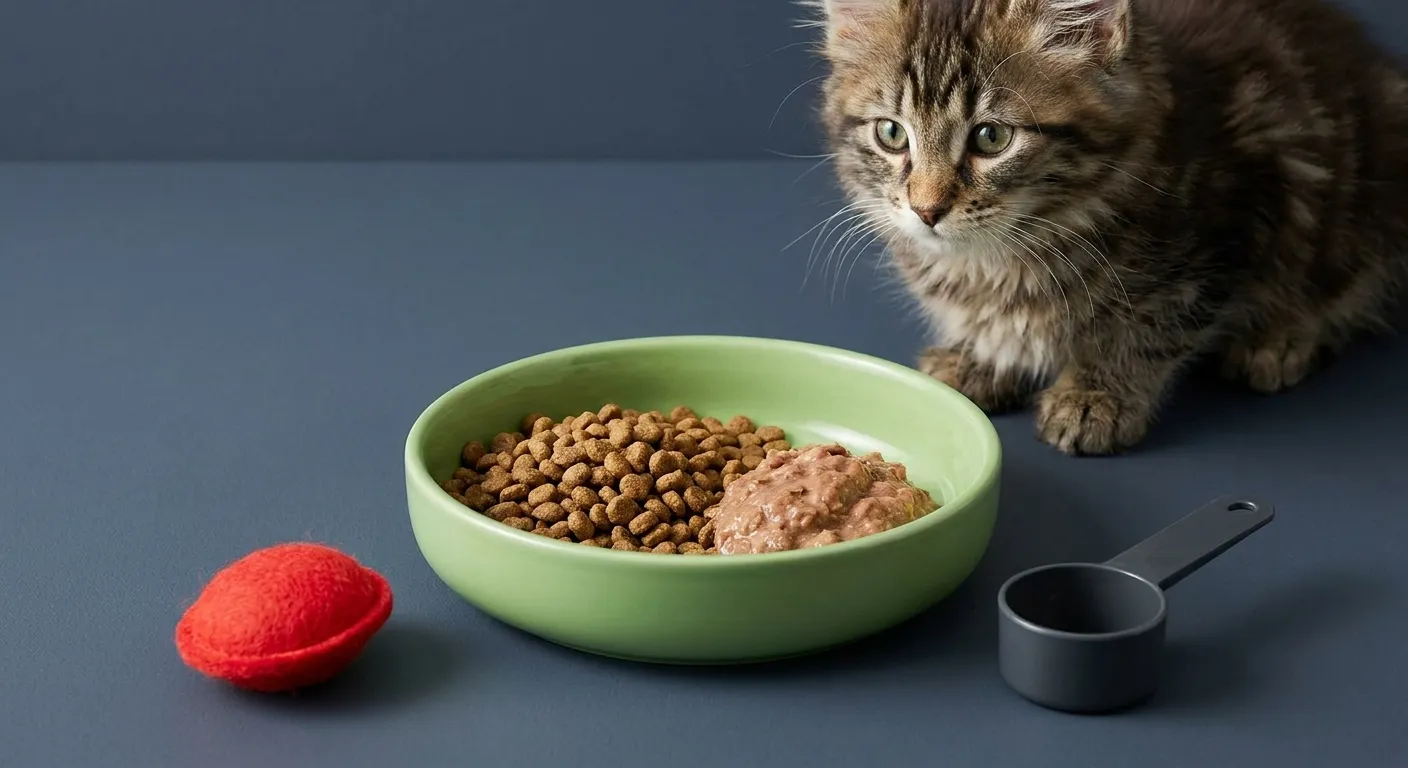
A Maine Coon kitten diet starts with the kitten’s current food, an appropriate life-stage label and a veterinary feeding plan. The gentle-giant nickname does not tell you how much to put in the bowl or when to change to adult food. Your kitten needs a routine you can measure, explain to other caregivers and review as its needs change.
This is general information, not veterinary advice or an individual nutrition prescription. Ask a qualified veterinarian about your kitten’s food, amount, meal arrangement and transition timing. Contact the clinic promptly about refusal to eat or concerning changes. Do not use this guide to calculate a therapeutic diet or correct poor growth without assessment.
Collect the feeding handover before changing anything
Ask the previous caregiver for the exact product name, formulation, package size and life-stage statement. Get a photograph of the label if possible. Record how food is measured, when it is offered and which treats or supplements are used. Similar-looking bags within one brand can contain different products; a brand name alone is not a feeding record.
Write what the kitten actually eats, rather than copy a manufacturer’s suggested portion and assume that it has been followed. Ask whether food is shared with another animal, whether leftovers are measured and whether feeding has recently changed. Those details help distinguish the planned routine from the kitten’s access to food.
Keep an appropriate supply of the familiar food while you arrange the first veterinary discussion. Do not replace several parts of the routine simply because a breed-specific package seems more attractive. Take the handover record to the appointment and ask which details should remain familiar and which need adjustment for this kitten.
Find the nutritional adequacy statement
FDA guidance on complete and balanced food explains that the nutritional adequacy statement identifies food intended as a sole diet. It distinguishes growth and reproduction from adult maintenance and explains that the claim can be supported by a nutrient profile or an AAFCO-procedure feeding trial. Treats and supplements generally are not complete sole diets.
Locate that statement on the actual kitten-food label. Photograph the wording and ask your vet whether the stated life stage suits your kitten. A front-of-pack word such as natural, premium or giant does not answer this question. Keep the complete statement with the product name so you can check that a replacement purchase is the same formulation.
If you cannot find or understand the statement, contact the manufacturer and discuss the answer with the vet. Do not invent an AAFCO certification or interpret an unrelated seal as proof of nutritional suitability. If the food is sold under another jurisdiction’s labelling system, ask the team which local adequacy information to check.
Discuss growth as an individual care question
Bring any existing weights and veterinary records to the appointment. Ask how the team will assess this kitten’s growth and body condition, and which follow-up arrangement it recommends. Do not select a target adult size from breed photographs and feed toward that number. The goal is the clinician’s assessment of your own kitten.
Ask when the feeding plan should be reviewed and how you should report a concern between visits. Maine Coons can be described as slow to mature, but that description does not establish a universal age for keeping every cat on kitten food. Record the team’s instructions for the transition rather than adopting an extended growth calendar from a general article.
The WSAVA nutrition resources include body and muscle condition assessment tools. Ask the veterinary team to show which observations are useful for your kitten and how they should be recorded. A large frame, long coat or rising scale reading should not be treated as a complete nutrition assessment on its own.
Turn the feeding instruction into a usable household routine
Ask the vet to specify the daily food allowance using the exact product and unit you can measure. Keep the unit visible: grams, a defined package portion or another instructed measure. If the instruction and package guide appear different, ask for clarification. Do not silently combine two separate daily recommendations.
Write how the allowance will be distributed across the agreed meals. Keep the daily total separate from the amount offered at one meal. A second caregiver should be able to see which meals were already given. This prevents a full day’s allowance being offered again because the bowl is empty when someone arrives home.
Use a simple record with date, amount offered, any leftover amount you can reasonably measure, treats and an observation. Mark an estimate as an estimate. The record does not need to look like a laboratory chart; it needs to help you explain the kitten’s actual access to food at the next review.
Keep food formats within one complete plan
Cornell’s feeding guide discusses differences between dry, semi-moist and canned foods and advises matching food to life stage. It also explains that cats vary in their food needs. Ask how your chosen format fits this kitten’s plan rather than declaring that every Maine Coon must eat one texture or a fixed wet-to-dry ratio.
If you offer more than one food, list the full details for each. Ask the team how their portions fit together. A whole daily allowance of dry food plus a whole daily allowance of canned food is not automatically an appropriate combined plan. Do not compare the products only by the size of their bowls or packages.
Keep clean, fresh water available. Check that the kitten can reach its familiar food and water locations without another pet interfering. If eating becomes difficult, describe the actual problem to the vet rather than assuming that a different flavour or a more expensive format resolves it.
Arrange a food change with clear instructions
When a change is appropriate, ask for a transition method suited to the kitten and the reason for changing. Record which products are involved and how the amounts should be adjusted. This guide does not prescribe a universal sequence of percentages or a fixed number of days for every kitten.
Change the feeding record at the same time as the food. Otherwise, a helper may follow the old allowance while another caregiver follows the new plan. Keep the earlier instruction dated and mark the current one clearly. If an item becomes unavailable, ask what substitute and transition arrangement are appropriate rather than choosing by a similar package colour.
During the change, record eating and any concerning observation. Contact the team if the kitten refuses food or seems unwell. Do not continue an unsuitable arrangement solely to finish a planned transition calendar. The written plan should include a way to ask for help when the individual response differs from what was expected.
Count extras and avoid improvised supplementation
List treats, food used for training, toppers and supplements alongside the main food. Ask how suitable extras belong within the allowance. Small items from several caregivers can be easy to overlook when only the bowl meal is recorded. Keep the products identified so the vet can review them rather than report merely some treats.
Cornell explains that supplements usually are unnecessary with a complete balanced diet and should not be given without veterinary approval. Do not add a growth powder, calcium product or human vitamin because your kitten is expected to become a large cat. Ask about the exact product and reason before using it.
A homemade or raw feeding proposal deserves a qualified nutrition discussion, not an ingredient list assembled from online recipes. Bring the proposed approach to the vet. This guide does not supply a recipe or claim that raw food improves growth, coat quality or breed health.
Make storage part of the routine
FDA’s food-handling advice includes clean hands and utensils, keeping dry food in its original bag and promptly refrigerating or discarding unused canned or pouched food. Follow the package instructions for the specific product. Keep its identification and lot details available instead of pouring food into an unlabelled container and discarding the bag.
Prepare a small feeding card for helpers: exact food, current amount and unit, meal arrangement, permitted extras, storage instructions and clinic contact. Date it and revise it when the veterinary plan changes. An accessible card is more useful than expecting a sitter to reconstruct the routine from several messages.
A Maine Coon kitten diet works best as an individual, reviewable routine. Start with the feeding handover, verify the life-stage statement and ask the veterinary team to translate the plan into amounts you can measure. Keep a simple record, share the current instructions and review changes promptly. You can support your growing gentle giant without guessing a breed-wide calorie target or promising a particular adult size.