An optimal Maine Coon diet is a plan that fits your own cat’s life stage, condition and health needs. It is not a universal ingredient percentage, a promise about coat quality or a serving chosen because the breed looks large. Start with the food already being used and identify one feeding question you want your veterinary team to help answer.
This article provides general information, not veterinary advice or an individual diet prescription. Consult a qualified veterinarian before changing feeding for a medical concern or pursuing weight loss. Contact the clinic about food refusal or concerning changes. A food comparison worksheet cannot diagnose a problem or replace a therapeutic feeding plan.
Define the question before shopping
Write the reason you are reviewing food. Perhaps a product is no longer available, you need clearer instructions for mixed feeding or your vet has asked for a nutrition review. These are different tasks. Changing brands without defining the task makes it difficult to determine what the new arrangement is supposed to accomplish.
Record the current food’s complete name, formulation and life-stage statement. Add the amount and unit actually used, the meal pattern and all extras. If the cat can eat another pet’s meals, note that access too. A feeding recommendation based only on the named bowl food may miss what the animal is actually eating.
Take relevant veterinary records and the food details to the team. Ask which question needs assessment first. Do not treat a breed-labelled food, a premium price or a persuasive ingredient description as proof that the product addresses the reason for your review. Suitability requires a clear connection to this cat’s plan.
Check life stage and nutritional adequacy
FDA explains the complete and balanced statement and its role in identifying food intended as a sole diet. Its guidance distinguishes growth and reproduction from adult maintenance. A complete-and-balanced claim can be supported through an AAFCO nutrient profile or a feeding trial using AAFCO procedures; this is not an invented product certification.
Find the exact statement on each candidate’s label and copy it into your comparison. Ask your vet whether it suits your cat’s current needs. A growing kitten and an adult may need different arrangements. Do not decide the life stage from a breed’s expected final size or keep kitten food indefinitely because Maine Coons are described as slow to mature.
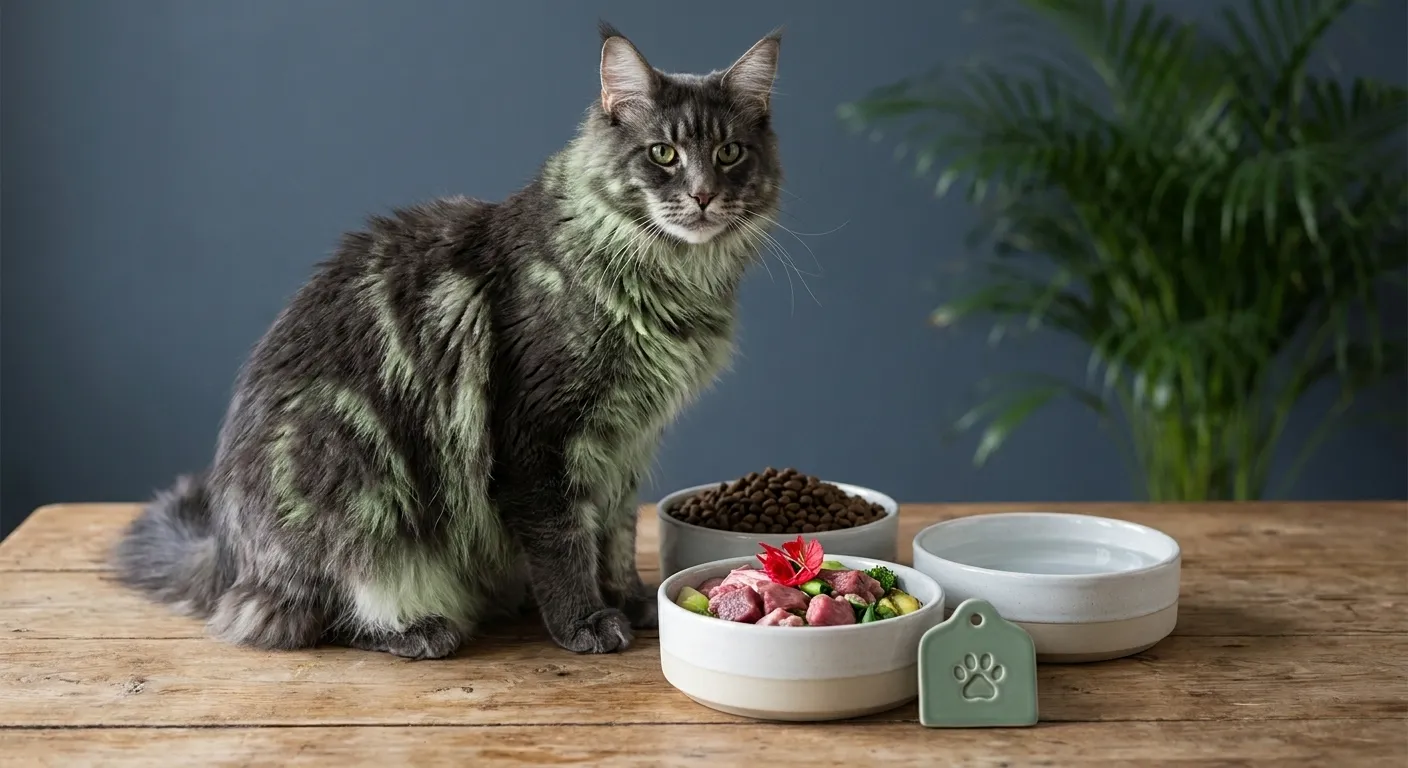
If a product is a treat, topper or complementary food, identify that role separately. Ask whether it belongs in the plan and how much is appropriate. An appealing meal photograph does not show that the product can supply the complete daily diet. Keep the label wording available rather than reduce it to a marketing category.
Compare formats with the actual feeding task
Cornell’s feeding guidance discusses dry, semi-moist and canned foods and their differing water content, calorie density and other properties. It also recognises individual preferences. Use those differences to ask practical questions about the actual products instead of ranking every wet food above every dry food.
Check which suitable format your cat accepts and which arrangement you can maintain. Ask the vet about any health-related requirements. This guide does not claim that ordinary dry food cleans teeth or that a particular texture prevents a disease. A feeding format and a clinical treatment are separate questions.
For mixed feeding, put each exact product on the worksheet. Ask how their amounts combine within the daily plan. Do not add the full daily recommendation from each package and assume the resulting total is correct. Keep water clean and accessible regardless of which suitable food formats are used.
Read numbers with their units attached
Record the energy information supplied for the exact formulation, including whether the unit is per kilogram, per gram, per package or another measure. Ask the maker or vet to clarify missing information. A number detached from its unit cannot tell you what a measured serving supplies.
FDA explains that guaranteed analyses generally use an as-fed basis, while comparisons across foods with substantially different moisture require an appropriate common basis. Do not rank a canned and dry food solely by comparing their printed protein percentages. Ask the team what comparison is relevant rather than invent an optimal breed-specific minimum from those labels.
Keep separate columns for facts printed on the label and questions not answered there. For example, the package may supply an energy value but not explain a suitable portion for your individual cat. That gap is a question for the feeding review. It is not permission to turn a large-cat photograph into a calorie calculation.
Ask for a body and muscle assessment
The WSAVA global nutrition resources include distinct body-condition and muscle-condition tools. Ask the veterinary team to demonstrate the assessment relevant to your cat and explain how it informs feeding. The long coat and large frame should not substitute for that assessment.
Bring earlier weights if you have reliable records. Mark the dates and how the weights were obtained. Ask how the team wants future observations recorded and when the plan should be reviewed. Do not compare your cat with an online maximum breed weight and assume that reaching it is desirable.
If weight management is recommended, request the individual amount, product choice and monitoring instructions. Do not sharply restrict food, apply a fixed loss rate or replace meals with a homemade mixture from a general article. A therapeutic change needs the veterinary plan and a way to obtain help if eating changes.
Translate the plan into a daily allowance
Write the prescribed or agreed amount using the exact product and a clear unit. Ask for a demonstration if measuring is confusing. Keep the total for the day distinct from one meal’s portion. When more than one caregiver feeds the cat, record what has already been offered so a second person does not repeat the full allowance.
Include suitable treats, training food and other extras in the discussion. Keep their names and quantities alongside the main food. A small contribution from several people can disappear from a record that only tracks the bowl. Ask how permitted extras fit the plan rather than select a universal percentage from another cat’s instructions.
Use a short log: date, food offered, leftover amount if reasonably measurable, extras and a relevant observation. State when a quantity is estimated. The purpose is to explain the real routine to the team, not produce a perfect-looking chart that hides uncertainty about who fed what.
Resolve feeding access before assuming dislike
Look at where eating occurs. Note whether another animal takes the food, whether the cat has an accessible familiar place and whether household activity interrupts meals. Cornell identifies environmental factors among considerations in feeding. Describe the arrangement concretely instead of labelling the cat stubborn or a picky Maine Coon.
If several cats share food, ask for an appropriate method to assess each animal’s intake. An empty shared bowl does not establish which cat ate the contents. A device or room change should be suitable for the household and the cats’ care needs. Check its instructions and ask for help rather than introduce an arrangement nobody can monitor.
Report refusal to eat or associated concerns to the vet. Do not cycle through products indefinitely to avoid assessment. The log can describe when the change began, what was offered and any other observation. It supports the clinical discussion without diagnosing the cause.
Change and store food with a clear plan
When a change is appropriate, request transition instructions for these products and this cat. Record the current and intended food, their amounts and the point at which you should contact the team. This guide does not impose a universal transition schedule or percentage sequence, especially where health concerns are involved.
FDA handling advice includes clean utensils, retaining dry food in its original bag and promptly refrigerating or discarding unused canned or pouched food. Follow the exact product’s storage instructions and keep its identification available. Check the package condition and expiry information when purchasing and using it.
Before adding a supplement, bring the exact product and proposed purpose to the vet. Cornell advises that supplements usually are unnecessary with a complete balanced diet and should not be given without veterinary approval. Do not add vitamins or a coat supplement because a breed article promises an improvement.
An optimal Maine Coon diet becomes practical when everyone can follow the same current instruction. Keep a dated feeding card with product names, amounts, units, extras, storage and the review arrangement. Start with one unresolved feeding question, bring accurate labels and observations to your vet, and adjust the routine with that advice. The useful outcome is a clear individual plan, not a claim that one food formula is best for every gentle giant.