If you have been researching one of the world’s most popular cat breeds, you have likely noticed significant Maine Coon price differences between purebred and mixed cats. Some kittens sell for hundreds of dollars, while others cost several thousand. For many prospective owners, these price variations can seem confusing at first glance.
The Maine Coon is famous for its large size, friendly personality, luxurious coat, and dog-like behavior. Because of these traits, demand for the breed remains consistently high. However, not every cat advertised as a Maine Coon comes from the same background. Some are registered purebreds with documented pedigrees, while others are mixed cats that share certain Maine Coon characteristics.
Understanding what influences pricing can help buyers avoid disappointment and make informed choices. Although cost is important, it should never be the only factor when selecting a pet. Health, temperament, breeder reputation, and long-term care requirements deserve equal consideration. By exploring the factors behind these costs, you can better understand the true value behind different types of Maine Coons.
Many people assume that appearance alone determines pricing. In reality, several factors contribute to Maine Coon price differences, including genetics, breeding practices, registration status, health testing, and overall demand. As a result, two cats that look similar may have dramatically different prices.
Why Purebred Maine Coons Cost More
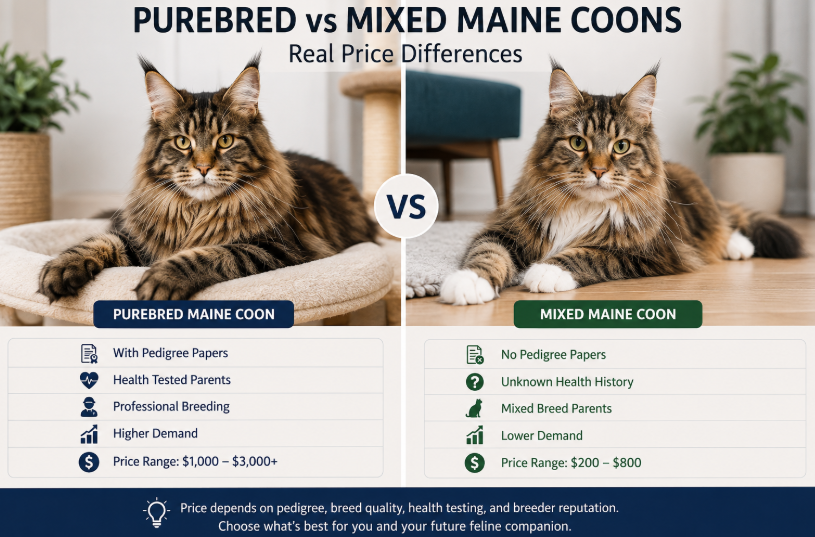
Purebred Maine Coons typically command the highest prices in the market. These cats come from carefully managed breeding programs that prioritize health, temperament, and breed standards. Consequently, breeders invest significant time and money before a kitten is ever offered for sale.
One major contributor to Maine Coon price differences is pedigree documentation. Purebred kittens often include registration papers from recognized cat associations. These documents verify ancestry and confirm that the cat meets breed requirements.
Responsible breeders also perform extensive health testing. Maine Coons can be predisposed to certain inherited conditions, including hypertrophic cardiomyopathy and hip dysplasia. Therefore, reputable breeders screen breeding cats to reduce the risk of passing genetic issues to future generations.
Veterinary care further increases costs. Quality breeders provide vaccinations, deworming treatments, health examinations, and sometimes microchipping before kittens leave for their new homes. Additionally, they often invest in premium nutrition and enriched living environments.
Breeding itself is expensive. Maintaining healthy breeding cats requires housing, food, medical care, and ongoing monitoring. As a result, ethical breeding programs naturally produce higher kitten prices compared to casual breeding situations.
Many breeders also limit the number of litters produced each year. This practice helps protect the health of breeding cats but reduces supply. Consequently, limited availability contributes to higher prices.
Understanding Mixed Maine Coons
Mixed Maine Coons often cost considerably less than registered purebreds. These cats may have one Maine Coon parent or possess physical traits commonly associated with the breed. While they can be beautiful and affectionate companions, they typically lack documented pedigrees.
The gap in Maine Coon price differences often begins with verification. Without registration papers, buyers cannot confirm ancestry with complete certainty. Even when a cat strongly resembles a Maine Coon, appearance alone cannot guarantee genetic heritage.
Many mixed cats inherit desirable features such as large bodies, fluffy tails, tufted ears, and sociable personalities. Therefore, they can offer many qualities people admire in the breed. However, breeders and shelters generally price them lower because they do not meet strict pedigree standards.
Adoption organizations frequently offer Maine Coon mixes at especially affordable rates. These fees usually cover vaccinations, spaying or neutering, and basic medical care. Consequently, adoption can provide excellent value for families focused on companionship rather than breed certification.
Mixed cats may also have greater genetic diversity. While this does not guarantee perfect health, broader genetic backgrounds can sometimes reduce the likelihood of certain inherited conditions. Nevertheless, every individual cat remains unique.
For many owners, the lower cost associated with mixed cats makes them an attractive option. However, buyers should still prioritize health evaluations and responsible sourcing regardless of price.
How Pedigree Impacts Value
Pedigree is one of the most important factors behind Maine Coon price differences. A pedigree serves as a documented family history that traces a cat’s lineage across multiple generations.
Breeders use pedigrees to preserve breed characteristics and manage genetic diversity responsibly. Therefore, kittens from well-documented bloodlines often carry higher prices. Buyers are not simply paying for appearance. They are also paying for predictable traits and verified ancestry.
Show-quality cats represent another pricing category. These kittens closely match official breed standards established by cat associations. Because of their potential success in competitions, they often command premium prices.
Pet-quality purebreds generally cost less than show-quality animals. Although they may have minor cosmetic variations, they still possess documented ancestry and strong breed characteristics. Consequently, many families choose pet-quality kittens as a more affordable alternative.
Import bloodlines can also influence costs. Breeders sometimes acquire cats from international programs to strengthen genetics and diversify breeding stock. These investments frequently increase kitten pricing as well.
Pedigree value extends beyond paperwork. It reflects years of selective breeding, careful planning, and long-term commitment to maintaining breed integrity. Therefore, pedigree remains a major factor in overall market pricing.
The Role of Health Testing and Care
Health testing significantly contributes to Maine Coon price differences. Responsible breeders prioritize preventive measures that protect both current and future generations.
Genetic screening helps identify conditions that may affect breeding decisions. While these tests increase operating costs, they also improve the likelihood of producing healthy kittens. Consequently, buyers often pay more for cats from thoroughly tested bloodlines.
Regular veterinary care adds another layer of expense. Breeders schedule routine examinations, vaccinations, parasite treatments, and health monitoring throughout a kitten’s early development. These measures support healthy growth and provide reassurance for buyers.
Nutrition plays an important role as well. High-quality food supports proper development, especially in large breeds that grow more slowly than many other cats. Therefore, reputable breeders frequently invest in premium diets from kittenhood onward.
Socialization is another hidden cost. Well-adjusted kittens require daily interaction, handling, and exposure to various experiences. As a result, breeders devote considerable time to raising confident and friendly cats.
Although health-focused breeding programs may charge higher prices, many buyers appreciate the long-term benefits. Investing in preventive care can potentially reduce future veterinary expenses and improve overall quality of life.
Supply, Demand, and Market Trends
Like many products and services, cat prices often reflect market demand. Maine Coons remain one of the most sought-after breeds worldwide. Consequently, strong demand contributes significantly to Maine Coon price differences.
Geographic location frequently affects pricing. Areas with fewer reputable breeders may experience higher costs because available kittens are limited. Likewise, regions with strong demand often see increased prices.
Color and coat patterns can also influence market value. Certain colors may attract more interest from buyers, leading to premium pricing. However, personality and health should remain more important considerations than appearance alone.
Waiting lists are common among respected breeders. Since many limit the number of litters they produce, available kittens may be reserved months in advance. As a result, scarcity can further elevate prices.
Economic factors occasionally impact the market as well. Rising veterinary expenses, food costs, and breeding expenses often affect kitten pricing. Therefore, prices may fluctuate over time even within the same breeding program.
Understanding market dynamics helps explain why costs vary so widely. However, buyers should remain cautious of prices that seem unusually low. Extremely cheap kittens may indicate inadequate care or questionable breeding practices.
Choosing Between Purebred and Mixed Cats
When evaluating Maine Coon price differences, the right choice ultimately depends on personal priorities. Some people value documented ancestry and predictable breed traits. Others simply want a loving companion with Maine Coon characteristics.
Purebred cats often appeal to enthusiasts who appreciate breed standards and verified genetics. They may also attract owners interested in showing cats or participating in breed-specific activities. Consequently, the higher price may feel justified for these buyers.
Mixed cats offer a different type of value. They frequently provide affectionate personalities, striking appearances, and lower acquisition costs. Therefore, they can be excellent companions for families seeking a pet rather than a pedigree.
Lifestyle considerations matter as well. Regardless of ancestry, large cats require proper nutrition, grooming, enrichment, and veterinary care. These ongoing expenses often exceed the initial purchase price over time.
Buyers should also evaluate the source carefully. Responsible breeders and reputable rescue organizations prioritize animal welfare. Consequently, choosing a trustworthy source is often more important than focusing solely on cost.
Taking time to research options helps ensure a positive experience. After all, bringing a cat into your home represents a long-term commitment rather than a simple purchase.
The Long Term Cost Beyond the Purchase Price
Many first-time buyers focus heavily on initial expenses. However, the purchase price represents only one part of total ownership costs. Therefore, understanding long-term responsibilities is essential.
Food expenses tend to be higher for large breeds because they consume more calories than average cats. Grooming tools, scratching posts, climbing structures, and larger beds may also increase spending.
Routine veterinary care remains an ongoing necessity. Vaccinations, wellness exams, dental care, and preventive treatments contribute to annual expenses regardless of whether a cat is purebred or mixed.
Pet insurance can provide additional financial protection. Some owners choose coverage to help manage unexpected medical costs. Consequently, insurance may become part of the overall ownership budget.
When comparing Maine Coon price differences, buyers should remember that lifetime care often costs far more than the initial acquisition fee. Therefore, selecting a healthy and well-socialized cat may provide better value in the long run.
Conclusion
Understanding Maine Coon price differences requires looking beyond simple numbers. Purebred cats generally cost more because of pedigree documentation, health testing, responsible breeding practices, and limited availability. Mixed Maine Coons typically offer a more affordable alternative while still providing many of the breed’s admired qualities.
Neither option is automatically better for every household. Instead, the best choice depends on individual goals, budget, and preferences. Some owners value documented ancestry and predictable traits, while others prioritize companionship and affordability.
Regardless of which path you choose, focusing on health, temperament, and responsible sourcing is essential. A well-cared-for cat can bring years of companionship, affection, and enjoyment. Ultimately, understanding Maine Coon price differences helps buyers make confident decisions and find the feline companion that best fits their lifestyle.
FAQ
1. Why are registered Maine Coons more expensive than mixes?
Registered cats often include documented pedigrees, health testing, and breeder investments that increase overall costs.
2. Can a mixed cat still have Maine Coon traits?
Yes. Many mixed cats display physical and personality traits commonly associated with the breed.
3. Are purebred cats healthier than mixed cats?
Health depends on genetics, breeding practices, and care. Neither group is automatically healthier than the other.
4. Is adopting a Maine Coon mix a good option?
Absolutely. Adoption can provide a wonderful companion at a lower initial cost.
5. What should I prioritize when choosing a kitten?
Focus on health, temperament, responsible sourcing, and compatibility with your lifestyle rather than price alone.