Many cat owners want to provide the healthiest meals possible for their pets. As a result, interest in natural cat diets has grown significantly over the past few years. Social media, pet blogs, and marketing campaigns often promote natural feeding as the best solution for feline health. However, veterinary recommendations are often more balanced than many people expect.
Understanding what veterinarians actually recommend can help owners make better decisions. While natural foods can play an important role in feline nutrition, experts focus on complete and balanced diets rather than trends. Therefore, knowing the difference between evidence-based advice and popular opinions is essential for every cat owner.
Cats are obligate carnivores. This means they require nutrients that come primarily from animal-based sources. Unlike some other pets, cats cannot thrive on plant-heavy diets. Their bodies depend on specific nutrients such as taurine, arachidonic acid, vitamin A, and high-quality protein. Consequently, any feeding plan must prioritize these nutritional requirements.
When discussing natural cat diets, veterinarians generally define natural foods as those containing recognizable ingredients with minimal artificial additives. However, natural does not automatically mean healthier. A diet can be natural and still lack important nutrients. Likewise, a commercially prepared food may contain some processed ingredients while still providing excellent nutrition.
One of the most common recommendations from veterinarians is to focus on nutritional completeness first. Cats need a balanced combination of protein, fats, vitamins, minerals, and water. Therefore, the source of food matters less than whether it meets established nutritional standards. Many veterinarians encourage owners to select foods that have undergone feeding trials or meet recognized nutritional guidelines.
Why Veterinarians Prioritize Balance Over Trends
Many feeding trends gain popularity because they sound appealing to humans. Raw diets, grain-free products, homemade recipes, and organic ingredients often receive attention online. However, veterinarians evaluate these options through the lens of scientific evidence.
For example, some owners assume that wild cats eat only raw prey and that domestic cats should follow the same pattern. While this idea sounds logical, modern cats live very different lives. Moreover, wild animals often face nutritional deficiencies, parasites, injuries, and shorter lifespans. Therefore, veterinarians focus on supporting long-term health rather than copying nature exactly.
Another important consideration is consistency. A cat’s body relies on receiving essential nutrients every day. Even small deficiencies can create serious health issues over time. As a result, vets often recommend commercial foods formulated by veterinary nutritionists because they provide predictable nutrient levels.
Owners interested in natural cat diets are frequently surprised to learn that many high-quality commercial foods already contain natural ingredients. Chicken, turkey, fish, eggs, and animal fats often serve as primary ingredients. In addition, reputable manufacturers formulate recipes to ensure nutritional balance.
Veterinarians also remind owners that marketing terms can be confusing. Labels such as “natural,” “premium,” or “holistic” may sound impressive. Nevertheless, these words do not always indicate superior nutrition. Reading ingredient lists and nutritional information is often more useful than focusing solely on marketing claims.
The Role of Protein in Feline Health
Protein remains one of the most important components of any cat’s diet. Because cats evolved as hunters, their bodies are designed to process animal protein efficiently. High-quality protein supports muscle maintenance, immune function, tissue repair, and overall vitality.
Veterinarians typically recommend foods that list animal-based proteins among the first ingredients. Chicken, turkey, beef, rabbit, lamb, and fish are common examples. Furthermore, protein should come from digestible sources that provide essential amino acids.
When evaluating natural cat diets, vets often encourage owners to pay attention to protein quality rather than simply protein quantity. A food with slightly lower protein but excellent digestibility may outperform a diet with higher protein levels from poor-quality sources.
Hydration also deserves attention. Cats naturally have a low thirst drive because their ancestors obtained moisture from prey. Consequently, many veterinarians recommend incorporating wet food into a cat’s routine. Wet foods can support hydration and may help reduce the risk of certain urinary issues.
Although dry food can be part of a healthy feeding plan, adding moisture often benefits many cats. Therefore, some veterinarians suggest a combination of wet and dry foods to balance convenience, hydration, and nutritional needs.
What About Homemade Diets?
Homemade diets appeal to many owners because they provide greater control over ingredients. Some people enjoy preparing meals and appreciate knowing exactly what their cats are eating. However, veterinarians approach homemade feeding with caution.
The primary concern involves nutritional imbalance. Many homemade recipes found online lack essential nutrients. Even recipes that appear healthy can contain dangerous deficiencies when fed long term. For example, insufficient taurine can lead to serious heart and eye problems.
Veterinarians who support homemade feeding usually recommend working directly with a board-certified veterinary nutritionist. This approach helps ensure that recipes meet all nutritional requirements. Additionally, professional guidance can prevent mistakes that may not become apparent for months or years.
Owners considering natural cat diets through homemade meals should understand that preparation involves more than cooking meat. Cats require carefully measured nutrients, supplements, and ingredient ratios. Therefore, successful homemade feeding requires planning and commitment.
Food safety also plays an important role. Proper storage, handling, and preparation reduce contamination risks. As a result, veterinarians often provide detailed guidance for owners who choose this route.
The Debate Around Raw Feeding
Raw feeding remains one of the most controversial topics in feline nutrition. Supporters argue that raw diets resemble a cat’s ancestral eating habits. They also claim improvements in coat quality, energy levels, and digestion.
However, many veterinary organizations express concerns about raw feeding. The primary issue involves bacterial contamination. Raw meat can contain pathogens such as Salmonella and E. coli. These organisms may affect both pets and humans within the household.
Another concern involves nutritional consistency. Some raw diets fail to provide balanced nutrition, particularly when owners prepare recipes without expert guidance. Furthermore, bones may present choking hazards or cause digestive injuries.
When discussing natural cat diets, many veterinarians recommend caution with raw feeding. They acknowledge that some cats may do well on properly formulated raw diets. Nevertheless, they stress the importance of understanding potential risks and consulting qualified professionals.
For owners attracted to raw feeding principles, some veterinarians suggest lightly cooked or commercially prepared alternatives that undergo safety testing. These products may offer a compromise between natural ingredients and improved food safety.
Ingredients Veterinarians Often Recommend
While individual recommendations vary, veterinarians commonly support several ingredient categories. Animal proteins remain the foundation of healthy feline nutrition. Chicken, turkey, beef, lamb, duck, rabbit, and fish frequently appear in recommended foods.
Healthy fats also contribute significantly to feline health. Omega-3 and omega-6 fatty acids support skin, coat, brain function, and inflammation control. Fish oil, salmon oil, and animal fats often provide these benefits.
Many owners worry about carbohydrates. In reality, small amounts of carbohydrates are generally acceptable for healthy cats. Although cats do not require carbohydrates in the same way humans do, moderate levels are not necessarily harmful. Therefore, veterinarians focus more on overall nutrient balance than eliminating every carbohydrate source.
Fiber can also support digestive health. Ingredients such as pumpkin, beet pulp, or specific vegetable fibers may help regulate digestion. Consequently, some natural diets include carefully selected fiber sources.
Owners exploring natural cat diets should remember that ingredient quality matters. However, balance, digestibility, and nutritional completeness remain equally important factors.
Common Misconceptions About Natural Feeding
Several myths continue to circulate among pet owners. One common belief is that all commercial foods are unhealthy. In reality, many commercial diets undergo extensive testing and quality control procedures.
Another misconception is that grain-free diets are automatically superior. Although some cats have specific sensitivities, most healthy cats tolerate grains well. Therefore, eliminating grains without a medical reason may provide little benefit.
Some owners also believe that cats need constant dietary variety. While occasional variety can be helpful, sudden food changes often cause digestive upset. Veterinarians generally recommend gradual transitions whenever introducing new foods.
The idea that natural foods can cure diseases represents another misunderstanding. Nutrition certainly supports health, but diet alone rarely resolves serious medical conditions. Consequently, veterinary care remains essential for diagnosing and managing illnesses.
These misconceptions sometimes influence decisions regarding natural cat diets. By relying on evidence-based information, owners can avoid unnecessary risks and focus on strategies that genuinely support feline well-being.
How To Choose the Right Diet for Your Cat
Every cat has unique nutritional needs. Age, activity level, medical history, weight, and lifestyle all influence dietary requirements. Therefore, a feeding plan that works well for one cat may not suit another.
Kittens require higher calorie and nutrient levels to support growth. Adult cats need maintenance nutrition that promotes long-term health. Senior cats may benefit from specialized diets designed to address age-related changes.
Veterinarians often recommend evaluating body condition regularly. Maintaining a healthy weight reduces the risk of numerous health problems. In addition, routine veterinary checkups help identify nutritional concerns before they become serious.
When selecting foods, look for products from reputable manufacturers with strong quality control standards. Check whether the food meets recognized nutritional guidelines. Furthermore, consult your veterinarian before making significant dietary changes.
For owners interested in natural cat diets, the best approach usually combines natural ingredients with scientific nutritional principles. This balance allows cats to receive wholesome foods while meeting all essential nutrient requirements.
Conclusion
The growing popularity of natural feeding reflects a genuine desire among owners to provide the best possible care for their cats. However, veterinarians consistently emphasize that nutritional balance matters more than marketing trends. While natural ingredients can certainly be part of a healthy feeding plan, they should never come at the expense of complete and balanced nutrition.
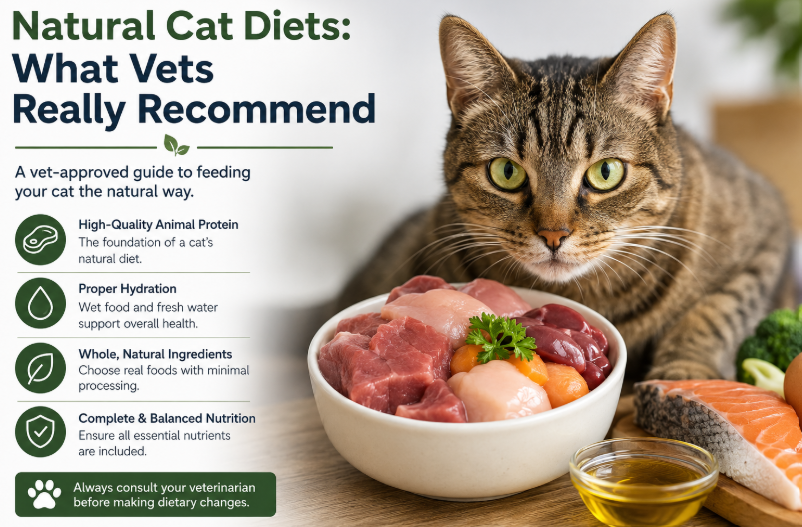
Veterinary experts generally recommend focusing on high-quality animal proteins, adequate hydration, essential nutrients, and foods that meet established nutritional standards. Whether you choose commercial foods, homemade meals developed with professional guidance, or carefully selected fresh ingredients, the goal remains the same: supporting your cat’s long-term health and well-being.
Ultimately, the most successful natural cat diets combine wholesome ingredients with sound nutritional science. By working closely with your veterinarian and making informed choices, you can create a feeding plan that helps your cat thrive for years to come.
FAQ
1. Are homemade meals healthier than commercial cat food?
Not necessarily. Homemade meals can be healthy when properly formulated, but many lack essential nutrients. Veterinary guidance is strongly recommended.
2. Is raw feeding safe for cats?
Raw feeding carries potential risks, including bacterial contamination and nutritional imbalances. Discuss the option with your veterinarian before starting.
3. Do cats need grains in their diet?
Cats do not require grains specifically, but most healthy cats can digest them without problems. Overall nutritional balance is more important.
4. How can I tell if a food is nutritionally complete?
Look for statements indicating the food meets recognized nutritional standards and consult your veterinarian for recommendations.
5. Should wet food be included in a cat’s diet?
Many veterinarians recommend wet food because it increases moisture intake and may support urinary health and hydration.